home · الكاتيشينات، والحالة الغريبة لـ <em>EGCG</em>
Catechins and EGCG
Catechin breakdown across storage — what happens in aged tea
Chá Duō Fēn · 茶多酚
Aging transforms the very molecules that define tea’s health profile — once-abundant catechins, including the famed EGCG, degrade into a quieter but far from silent array of polymers. Here’s what the chemistry and the cellars tell us.
A freshly pressed raw pu-erh cake tastes bright, almost green — brisk, vegetal, astringent. That sharp grip on the tongue is largely the work of monomeric catechins, especially epigallocatechin gallate (EGCG), which can account for up to half of the total polyphenols in máo chá. Fast forward fifteen years in a Kunming storehouse and the same cake pours a deep amber liquor, its mouthfeel smooth and almost sweet, with none of that youthful bite. The catechins haven’t vanished; they’ve transformed. For anyone who drinks aged tea for digestive comfort, low bitterness, or a perceived gentler effect on the stomach, the question is worth asking: what exactly happens to these compounds across the years, and does that loss of catechins signal a loss of benefit, or merely a chemical shift into something else entirely? This article traces the breakdown of catechins in aged tea, drawing on storage-room observations from Mongolia to Menghai and on the slowly accumulating literature.
The catechin family in fresh tea leaf
Before a cake goes into storage, its starting catechin profile sets the baseline. Fresh shài qīng máo chá from Yunnan’s large-leaf varietal carries a total catechin content typically between 150 and 220 mg/g, of which EGCG alone can be 80–120 mg/g — numbers comparable to a high-grade Chinese green tea. The other major monomers include epicatechin gallate (ECG, 20–40 mg/g), epigallocatechin (EGC, 15–30 mg/g), and epicatechin (EC, 5–15 mg/g). These figures are enshrined in the Chinese national standard for pu-erh raw material, GB/T 22111-2008, which sets minimum polyphenol thresholds for designated origin teas. In the mouth, the catechins bind to salivary proline-rich proteins, causing the astringent, drying sensation that aficionados of young sheng either relish or learn to wait out. It’s exactly that sensory profile that tells us how much monomeric catechin is present — and why the disappearance of astringency is the first marker that the chemistry is shifting.
Mao cha vs. finished cake — a pre-storage snapshot
Processing already begins to alter the catechin pool before the tea ever meets humidity. Wok-firing for shā qīng denatures polyphenol oxidase but leaves autoxidation pathways open. Rolling ruptures cell walls, exposing catechins to oxygen. A 2013 analysis by Zhang et al. (Food Chemistry) found that even within the first year after pressing, EGCG content in sheng pu-erh dropped by 5–8% compared to the original máo chá, while gallic acid, a catechin breakdown product, increased. So the aging clock starts ticking well before the cake enters a collector’s cellar.
Two paths of catechin loss — oxidation and microbial metabolism
The fate of catechins divides along the storage spectrum. In traditional dry-stored sheng, kept in relative humidity below 65% and moderate temperatures, oxygen-driven polymerization dominates. In wet-stored cakes — the Hong Kong or a’cang style, where humidity routinely exceeds 80% — a complex microbial consortium intervenes. Fungi of the genus Aspergillus, yeasts, and bacteria secrete extracellular enzymes that hydrolyze ester bonds in the gallated catechins, cleaving gallic acid from the flavan-3-ol backbone. Amgalan Chin, who maintains aging rooms in Ulaanbaatar as well as in Menghai, describes the contrast: ‘In Mongolia’s arid winters, a 2005 cake might still retain 30% of its original EGCG after fifteen years, but the tea tastes of old books and forest floor, not of green. In a wet Menghai cellar, the same cake can drop below 5% EGCG within seven years, replaced by a thick, earthy sweetness.’
Natural versus accelerated aging
Accelerated aging experiments at 37 °C and 80% RH, such as those by Lv et al. (2015), produce a ten-year equivalent drop in EGCG in about twelve months — but the sensory and chemical fingerprint differs from genuine slow aging. The ratio of theaflavins to theabrownins skews, and bitterness reduction happens faster than the development of the complex woody aromas that drinkers prize. This underscores that catechin breakdown is only part of the aging story.
Key transformations — from monomers to polymers
EGCG is notoriously unstable: it epimerizes to gallocatechin gallate (GCG) under heat, then can further oxidize or condense with other polyphenols. The most consequential pathway in dark tea aging is the condensation of catechins and their oxidized quinones with other compounds to form high-molecular-weight polymers known as theabrownins. These are the dark, water-soluble macromolecules that give aged tea its deep mahogany liquor. Zhang et al. (2013) tracked a Mengku-area cake over ten years and found that total catechins fell to 12% of their initial value, while theabrownins increased fourfold, from 4.6% to 18.3% of dry weight. Master He Shihua, a third-generation merchant from Kunming, told me that his 1998 Yì Wǔ cake lost 90% of its original catechins but ‘gained a honeyed camphor note that has nothing to do with the leaves as they were.’ The colour shift — from pale amber through orange to deep chestnut — is the visible signature of polymerisation.
Antioxidant capacity — not a simple subtraction
It’s tempting to equate catechin loss with diminished health benefit, but the picture is more nuanced. Total polyphenol content, measured by the Folin-Ciocalteu method, often remains significant in aged pu-erh because theabrownins and other polymeric phenolics are still reactive. A 2020 review by Wang et al. in Critical Reviews in Food Science and Nutrition catalogued multiple studies finding that theabrownins from dark teas retain DPPH and ABTS radical-scavenging activities comparable to monomeric catechins on a per-weight basis. However, their large molecular size may limit absorption across the gut barrier — a point our article on EGCG bioavailability explores in detail. Intriguingly, the 2019 paper on aged sheng and serum lipids (see our linked article) found that both young and aged sheng extracts lowered triglycerides in rats, but the aged extract also modulated gut microbiota more strongly, possibly through the non-absorbable theabrownins acting as prebiotic fibres. This suggests that aged tea may shift its bioactivity from direct systemic antioxidant effects to gut-mediated pathways — a line of research still in its early stages.
Storage conditions — the real-world experiment
Every cellar is a living laboratory. Temperature accelerates catechin degradation exponentially; a 10 °C rise roughly doubles the rate. Humidity provides the water necessary for hydrolysis and microbial growth. In Amgalan Chin’s Ulaanbaatar cellar, winter temperatures regularly drop to -15 °C and indoor humidity hovers around 25%. ‘The cakes barely breathe for six months,’ he notes. ‘Then in summer, when humidity climbs, you can smell the microbial activity restarting.’ The catechin loss curve in that environment is roughly 5–8% per year, compared with 12–15% per year in a typical Taiwanese natural storage. Collectors who prioritise preserved EGCG for personal wellness might aim for sealed, cool-dry storage (below 25 °C, below 60% RH), but they will sacrifice the complex, earthy profile that only mediated breakdown provides. Our catalogue at thetea.app lists the storage region and approximate age for every aged cake, so you can make an informed choice.
The microbial fingerprint
Recent work, including studies reviewed in our shu pu-erh microbiome article, shows that distinct microbial communities correlate with specific catechin metabolites. For example, Aspergillus niger is particularly efficient at converting EGCG into gallic acid and pyrogallol, compounds that themselves have shown anti-inflammatory potential. Thus the microbial ‘terroir’ of a storage room may be as important as the leaf variety in determining the final chemistry. This is an area where the traditional knowledge of a’cang masters is only now finding quantitative backing.
What the health-conscious drinker should know
For someone choosing between a young sheng, a twenty-year-old dry-stored cake, or a ten-year-old wet-stored brick, the catechin data offer a few grounded takeaways. First, if your primary goal is to ingest a known dose of EGCG — for the reasons discussed in our companion piece ‘How much EGCG is actually in a real brew’ — you are better off with a fresh green or white tea, where EGCG infuses at 40–60 mg per cup. Aged pu-erh will deliver only a fraction of that. Second, the transformation to theabrownins doesn’t render the tea inert; it redirects its effects toward the gut, with emerging evidence on lipid metabolism and microbiome modulation. Third, aging introduces variability that no single laboratory analysis can fully capture. The 2024 cardiovascular meta-analyses remind us that tea drinking, regardless of age, is associated with lower disease risk — but the specific contribution of aged tea remains an open question. As always at tea.doctor, we emphasise that no cup of tea is a medicine, and anyone with a health condition should consult a qualified practitioner.
References
- GB/T 22111-2008. Product of geographical indication — Pu'er tea — Standardization Administration of China
- Zhang, L. et al. Dynamic changes of catechins and theaflavins during the processing and storage of Pu-erh tea. Food Chemistry, 2013, 138(2-3), 1821-1827 — Food Chemistry
- Lv, H.-P. et al. Effect of storage time and temperature on chemical compounds and antioxidant activity of raw Pu-erh tea. Journal of Food Science, 2015, 80(6), C1391-C1398 — Journal of Food Science
- Wang, Q. et al. Formation and bioactivity of theabrownins in dark tea: a review. Critical Reviews in Food Science and Nutrition, 2020, 60(18), 3066-3081 — Critical Reviews in Food Science and Nutrition
- Jiang, H. et al. Epimerization and degradation of tea catechins during Pu-erh tea aging. Food Research International, 2018, 106, 875-884 — Food Research International
Read next
Related articles
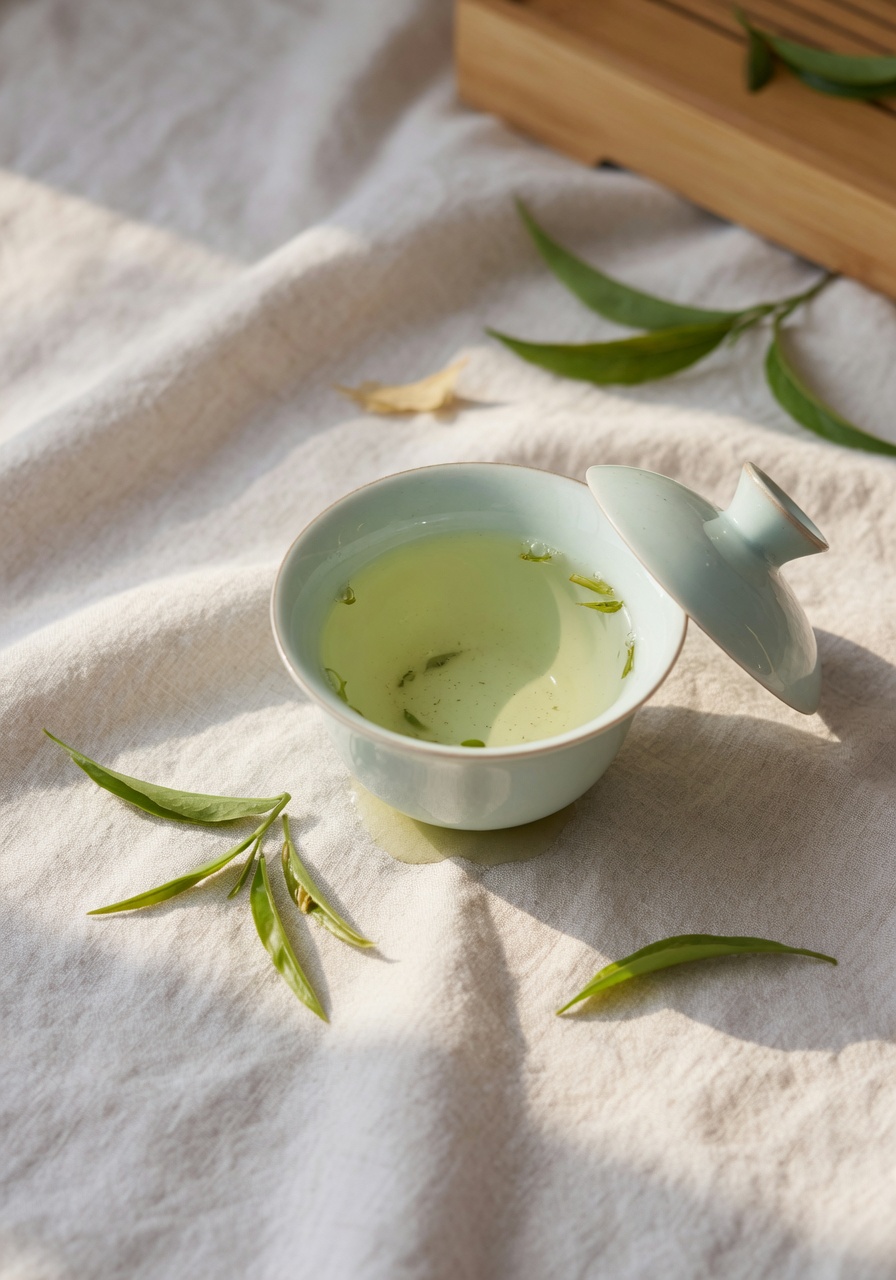
كمية EGCG الفعلية في كوب شاي حقيقي
تستخدم دراسات الكبسولات 300–800 مغ من EGCG. أما كوب شاي أخضر في غايوان واحد فيقدم جزءاً بسيطاً من ذلك — وهذا الفرق أكثر أهمية مما تعترف به معظم كتابات العافية.
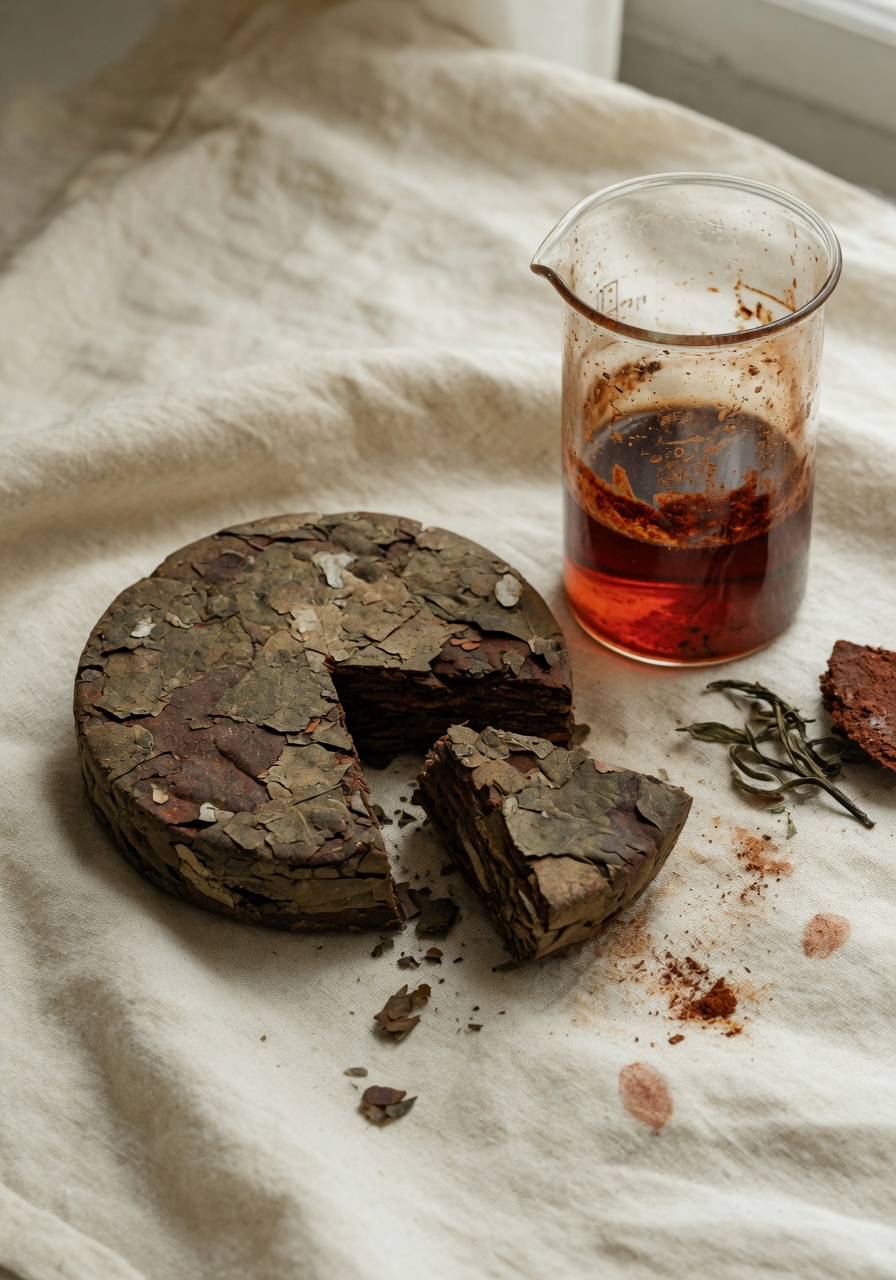
شاي السينج المعتق ودهون المصل — نظرة متفحصة على ورقة 2019
أفاد فريق جامعة كونمينغ الطبية بأن الثيابراونينات المستخلصة من شاي البو-إره خفضت الكوليسترول لدى الفئران. انتشرت الورقة بعيدًا — أحيانًا أبعد مما ينبغي. إليك ما قاسته، وما لم تقسه، وكيف يتناسب السنج المعتق مع الصورة.
EGCG bioavailability — what's measured in human plasma
What researchers actually find in blood after a cup of green tea — and why 200 mg of EGCG in the cup doesn’t equal 200 mg in plasma.
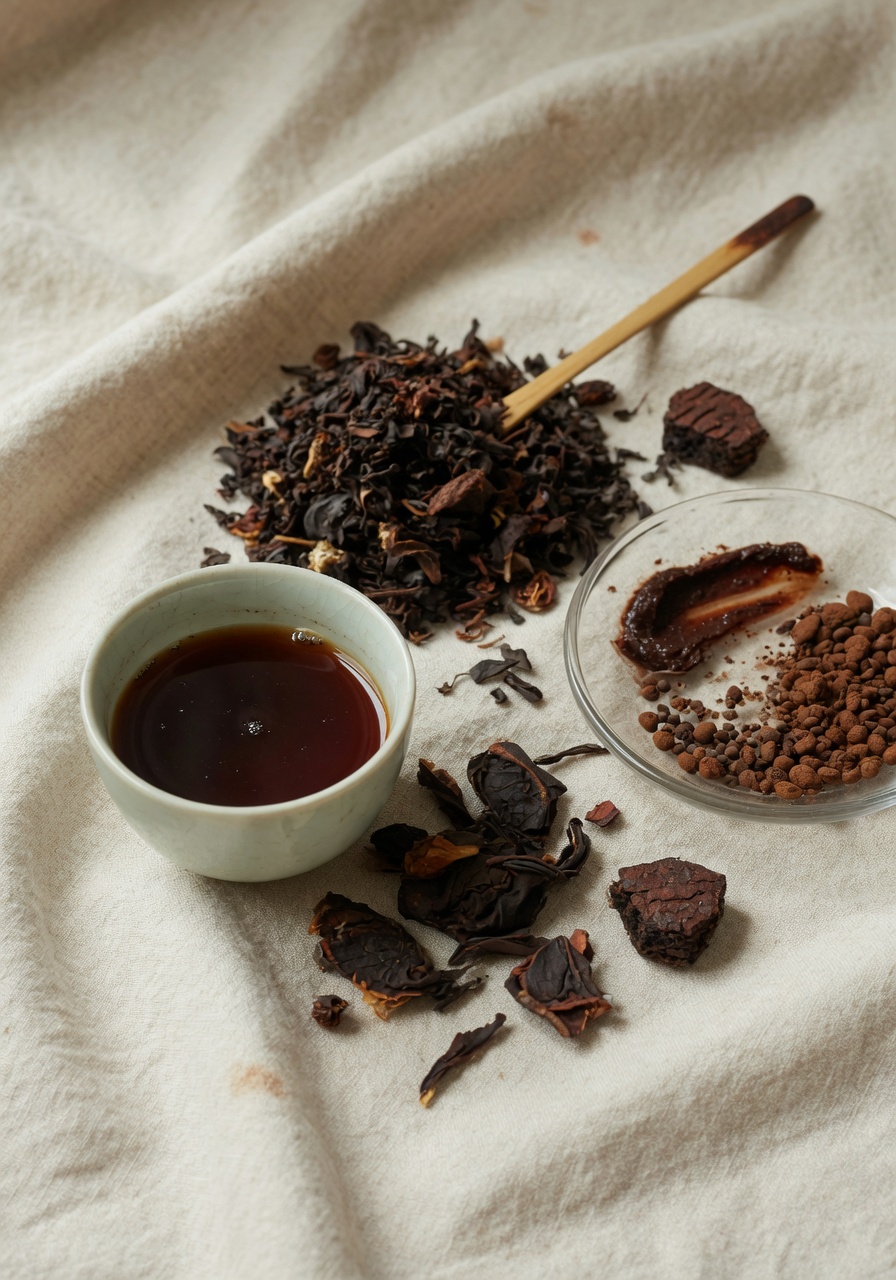
شو بو إير والميكروبيوم المعوي — دراسات صغيرة، ادعاءات كبيرة
أطلقت ورقة بحثية صدرت عام 2019 من كونمينغ حول الثيابرونين موجة صغيرة من الحماس للميكروبيوم تجاه شو بو إير. الكيمياء حقيقية، بيانات الفئران مثيرة للاهتمام، الأدلة البشرية ضعيفة — إليك ما تقوله الأدبيات فعلياً.