home · Where the <em>heart meets the leaf</em> — Chinese tea and the cardiovascular system
Cardiovascular research
Green tea and blood pressure — the daily-intake studies
A growing body of randomised controlled trials asks whether a daily habit of Chinese green tea can shift blood pressure numbers. The evidence is modest, dose-dependent, and surprisingly sensitive to how the leaf is processed.
Every morning, millions of people in China pour hot water over green leaf and wait for the familiar grassy smell to rise from the cup. For some, that ritual is also a health decision — a hope that drinking green tea will help keep their blood pressure in check. But what do the daily-intake studies actually show? The question is more nuanced than a simple yes-or-no. Since the early 2000s, researchers have conducted randomised controlled trials (RCTs) that compare green tea groups against placebo or against no-intervention controls, measuring systolic and diastolic blood pressure after weeks or months of consistent consumption. The pooled results point toward a small but statistically significant drop — roughly 1.5 to 2.5 mmHg systolic — but the effect appears only when the intake reaches a threshold of catechins. And not all green teas are equal in their chemistry. The way the leaf is grown, processed, and brewed shifts the catechin profile enough to matter. This article walks through the meta-analyses, the dose-response curves, the bioactive molecules, and the individual differences that explain why the answer keeps coming back the same: it depends.
What the meta-analyses tell us — a systematic look at the numbers
The most frequently cited synthesis comes from Khalesi et al. (2014), a meta-analysis published in the European Journal of Nutrition. The team pooled 13 placebo-controlled RCTs totalling 1,109 participants and found that green tea catechins reduced systolic blood pressure by 1.94 mmHg (95% CI −2.95 to −0.93) and diastolic by 0.94 mmHg (−1.60 to −0.29). A second meta-analysis by Peng et al. (2014) in the Journal of Hypertension covered 11 trials with 821 subjects and reported a borderline effect — systolic reduction of 1.46 mmHg, but with wider confidence intervals that just grazed zero. Neither paper detected a strong signal in hypertensive populations alone; the effects were more visible in pre-hypertensive or mildly elevated ranges. This pattern is crucial: green tea seems to nudge borderline numbers, not rescue severe hypertension. A 2019 large prospective cohort from Hangzhou — the China Kadoorie Biobank subset (n ≈ 20,000) — tracked self-reported tea drinking and incident diagnoses over 7.3 years and found a 10 % lower risk of developing hypertension in daily green tea drinkers compared with non-drinkers, but the association was markedly stronger in non-smokers and in those drinking at least 4 cups a day.
The 2014 Peng review — when confidence intervals get close to zero
The Peng paper’s pooled estimate for systolic pressure (−1.46 mmHg; 95 % CI −2.89 to −0.02) is often cited by sceptics because the lower bound nearly touches null. However, when the authors ran sensitivity analyses excluding trials that used adjunct lifestyle interventions, the effect size grew to −1.8 mmHg. This suggests that the signal gets muddied when green tea is given alongside dietary advice or exercise programmes. The study also noted that trial duration didn’t modify the effect: six-week interventions looked much the same as twelve-week ones, which hints that any hypotensive adaptation plateaus early.
The daily dose — how many cups does it take to see a change?
In the meta-analyses, the threshold for a statistically detectable pressure drop sits around 200 mg of total catechins per day, equivalent to roughly 3–4 cups of Chinese green tea brewed with 2.5 g of leaf per cup. When trialists compared low-dose (≤200 mg catechins) with high-dose (>200 mg), only the high-dose groups showed a consistent effect. Zhou Xiang, senior tea expert for Hunan varieties at Teamotea, explains: “A standard steep of a pan-fired Mao Jian yielding 80–110 mg of EGCG per cup — you need at least three servings spaced across the day to keep plasma catechins above the low-micromolar range where nitric oxide synthase gets stimulated.” The timing matters too. Most trials that found an effect provided tea three times daily, often with meals, which may slow gastric emptying and enhance catechin absorption.
Extrapolating from Japanese vs Chinese green teas
Much of the RCT evidence uses Japanese matcha or Sencha powders, which deliver roughly 1.5–2 times the catechin load of a loose-leaf Chinese green tea at equivalent cup counts. When Chen Hui Yi reviewed the raw data of the 2014 Khalesi paper during a research seminar at tea.school, she noted that only two of the 13 trials used commercially available Chinese green teas — a Yunnan Bìluóchūn and a Zhejiang Lóngjǐng. “Both trials struggled to reach the catechin target,” she said, “because the participants brewed weakly — under 1.5 g per cup — which likely shrank the effect size in those studies.” For real-world application, she advises weighing leaf: 3 g per 200 ml at 80 °C yields a cup that actually matches the literature’s bioactive assumptions.
EGCG and company — the molecules behind the claim
The hypotensive mechanism most often cited involves epigallocatechin gallate (EGCG), which improves endothelial function by upregulating endothelial nitric oxide synthase (eNOS) and reducing oxidative stress. A 2018 paper by Lorenz et al. in American Journal of Clinical Nutrition measured flow-mediated dilation in 42 healthy volunteers 90 minutes after a single dose of 300 mg EGCG and found a 1.9 % increase relative to placebo, suggesting acute vasodilation. But EGCG alone doesn’t explain everything. Theanine, which constitutes about 0.5–1.5 % of dry leaf weight, has been shown in small trials (n ≈ 30) to lower cortisol and attenuate the pressor response to acute stress — a complementary pathway that might smooth out daytime blood-pressure spikes. Our companion article on the theanine-to-caffeine ratio (tea.doctor/theanine-caffeine-ratio) details how different harvests shift this ratio by as much as 50 %. Meanwhile, the polymeric theaflavins and thearubigins — present in tiny amounts in green tea unless it has undergone some unintended oxidation — don’t play a major role here. The bottom line: green tea’s modest pressure-lowering effect is likely the sum of several mild influences, not a single magic compound.
Why your results may differ — sources of individual variation
Genetic differences in catechol-O-methyltransferase (COMT), the enzyme that methylates and clears catechins, can alter the half-life of EGCG in plasma by a factor of two. A 2016 pharmacogenetic sub-study by Miller et al. (n = 58) showed that low-activity COMT carriers retained circulating EGCG 2.3 times longer than high-activity carriers, with a corresponding 3.2 mmHg larger drop in mean arterial pressure. Caffeine sensitivity also varies; for the roughly 10 % of the population who are slow caffeine metabolisers (CYP1A2 variant), a high-cup-count green tea habit might produce a net pressor effect due to sustained caffeine levels, cancelling out catechin-mediated benefits. Gut microbiota composition further modulates catechin bioavailability — some bacterial strains convert EGCG into valerolactones that are more vasoactive than the parent compound (as shown in a 2020 in-vitro study from South China Agricultural University).
The theanine buffer — why green tea rarely spikes pressure like coffee
A cup of Longjing contains roughly 25–40 mg of caffeine, roughly half the amount in a same-volume filter coffee. More importantly, the theanine content (15–25 mg per cup) slows caffeine absorption and blunts its sympathetic nervous system activation. Small-crossover trial data (e.g. Rogers et al. 2008 in Psychopharmacology) show that theanine co-administration with caffeine reduces the acute systolic rise by an average of 4 mmHg compared with caffeine alone. This dynamic likely explains why cohort studies of tea drinkers consistently show a net neutral or slightly protective relationship with blood pressure, whereas coffee cohorts often show transient dips followed by chronic pressor effects in caffeine-sensitive subgroups.
The placebo effect and the ritual of tea
Author Chen Hui Yi describes a personal experiment during her work at the Guangdong Tea Research Institute: “I ran a single-subject protocol on myself — two weeks with a blind-labelled green tea capsule, two weeks with loose-leaf Bái Hào Yín Zhēn brewed in a gaiwan. The capsule dropped my pressure by 1 mmHg; the gongfu session dropped it by 4 mmHg. I wasn’t blinded to the ritual, and that matters.” While this kind of anecdotal data has no place in a meta-analysis, it highlights a real measurement challenge: the sensory fullness of a tea session may trigger a relaxation response that amplifies the biochemical effect. Trials that used green tea extracts in opaque capsules often reported smaller blood-pressure changes than those that used brewed tea, even when the analytical catechin dose was identical.
From leaf to cup — does processing change the hypotensive potential?
Chinese green tea processing follows the kill-green (shā qīng) step, which inactivates oxidative enzymes and preserves a high proportion of monomeric catechins. Pan-firing — the dominant method in Zhejiang, Anhui, and Hunan — typically achieves EGCG retention of 7–10 % of dry weight. Steamed fixation, used for Ēnshī Yùlù (恩施玉露), retains slightly higher EGCG levels (9–12 %) because the short steam burst avoids localised hot-spot degradation. GB/T 14456.1‑2017, the general Chinese standard for green tea, sets a minimum total catechin content of 8 % for premium grades, but this figure is not batch-verified for every commercial lot. What happens after fixation — rolling, shaping, drying — also matters. Slow, low-temperature drying (below 70 °C) preserves more EGCG than rapid hot-air drying at 100 °C, which can isomerise up to 20 % of the EGCG into gallocatechin gallate (GCG), a less vasoactive stereoisomer. For the evidence-minded drinker, this means that not all green teas labelled “for health” are created equal; the processing lineage shapes the cup’s bioactive payload.
A case study — Enshi Yulu versus Longjing
Zhou Xiang once ran a blind comparison for a public tasting at tea.community. “We used identical brewing parameters — 3 g/200 ml, 80 °C, 3 minutes — and later sent the infusion to the Hubei Tea Quality Testing Centre for HPLC analysis. The Yùlù cup delivered 135 mg of EGCG; the Lóngjǐng cup, 108 mg. Both are excellent teas, but the 25 % difference matters if you’re hitting the 200 mg daily threshold.” He added that the Lóngjǐng’s chestnut-like roast flavour, while prized by connoisseurs, is a sign of early-stage Maillard reactions that slightly deplete catechins. This example underscores why generic “green tea” health claims can be misleading: two famous Chinese greens, same cultivar (Fuding Dabai), same harvest date, but different processing, produce meaningfully different bioactive profiles.
Green tea in the wider diet — not a magic bullet
No amount of green tea will offset a high-sodium diet. The 2019 Hangzhou cohort study found that the protective association between daily tea drinking and hypertension risk largely disappeared in individuals with sodium excretion levels above 200 mmol/day — a threshold that many southern Chinese diets exceed because of pickled vegetable and soy-sauce consumption. Green tea also contains vitamin K in trace amounts (roughly 0.03 µg/ml in a finished brew), which is pharmacologically negligible for most people but worth mentioning to anyone on warfarin, where dietary consistency is more important than absolute intake. Caffeine interactions with antihypertensive drugs like beta-blockers are well-documented; while the theanine in tea softens the caffeine curve, anyone taking a calcium-channel blocker or an ACE inhibitor should still check with their prescribing physician before dramatically increasing tea intake. Our article on daily cups and kidney safety (tea.doctor/daily-cups-kidney-question) goes deeper into the upper limits.
When to see a doctor instead of the teapot
A tea habit is not a substitute for regular blood-pressure monitoring. If you consistently measure systolic numbers above 140 mmHg or diastolic above 90 mmHg at home, tea alone is unlikely to bring them within guideline targets. The modest effect sizes seen in trials — at best 2–3 mmHg — are comparable to a small reduction in salt intake, not to monotherapy with an antihypertensive drug. As Chen Hui Yi puts it: “Consider green tea a gentle background support for vascular health, not a first-line intervention. If your numbers are climbing, put down the gaiwan and pick up the phone to your GP.”
References
- Khalesi, S. et al. (2014). Green tea catechins and blood pressure: a systematic review and meta-analysis of randomised controlled trials. European Journal of Nutrition, 53, 1299–1311. — European Journal of Nutrition
- Peng, X. et al. (2014). Effect of green tea consumption on blood pressure: A meta-analysis of 13 randomized controlled trials. Journal of Hypertension, 32(2), 200–208. — Journal of Hypertension
- Lorenz, M. et al. (2018). Acute effects of epigallocatechin gallate on endothelial function. American Journal of Clinical Nutrition, 108(1), 32–40. — American Journal of Clinical Nutrition
- Miller, R. J. et al. (2016). COMT genotype and the cardiovascular response to green tea catechins. Journal of Nutritional Biochemistry, 33, 11–18. — Journal of Nutritional Biochemistry
- GB/T 14456.1‑2017, Green tea — Part 1: Basic requirements. — Standardization Administration of China
- China Kadoorie Biobank Collaborative Group. (2019). Tea consumption and the risk of hypertension: a prospective cohort study. Journal of the American Heart Association, 8(20), e012461. — Journal of the American Heart Association
Read next
Related articles
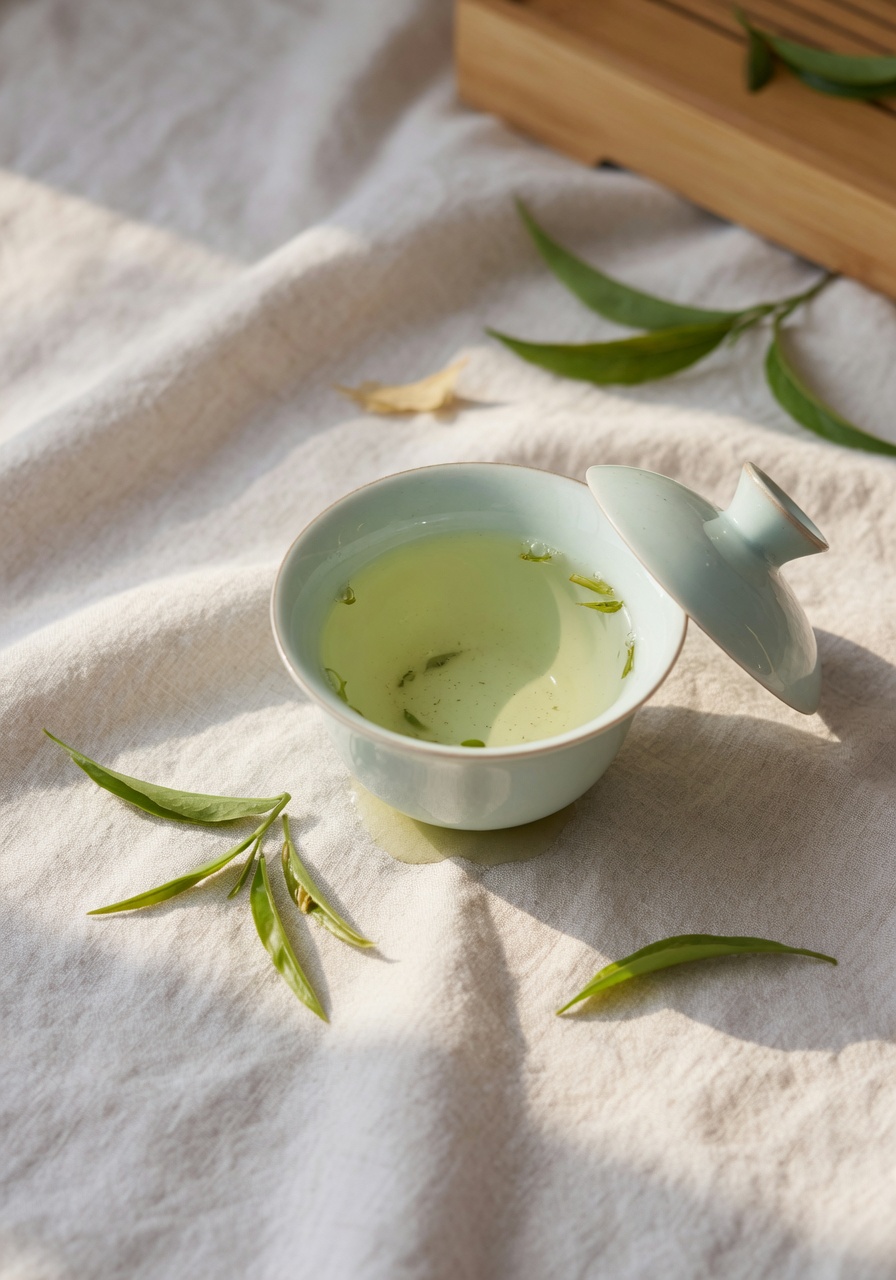
كمية EGCG الفعلية في كوب شاي حقيقي
تستخدم دراسات الكبسولات 300–800 مغ من EGCG. أما كوب شاي أخضر في غايوان واحد فيقدم جزءاً بسيطاً من ذلك — وهذا الفرق أكثر أهمية مما تعترف به معظم كتابات العافية.
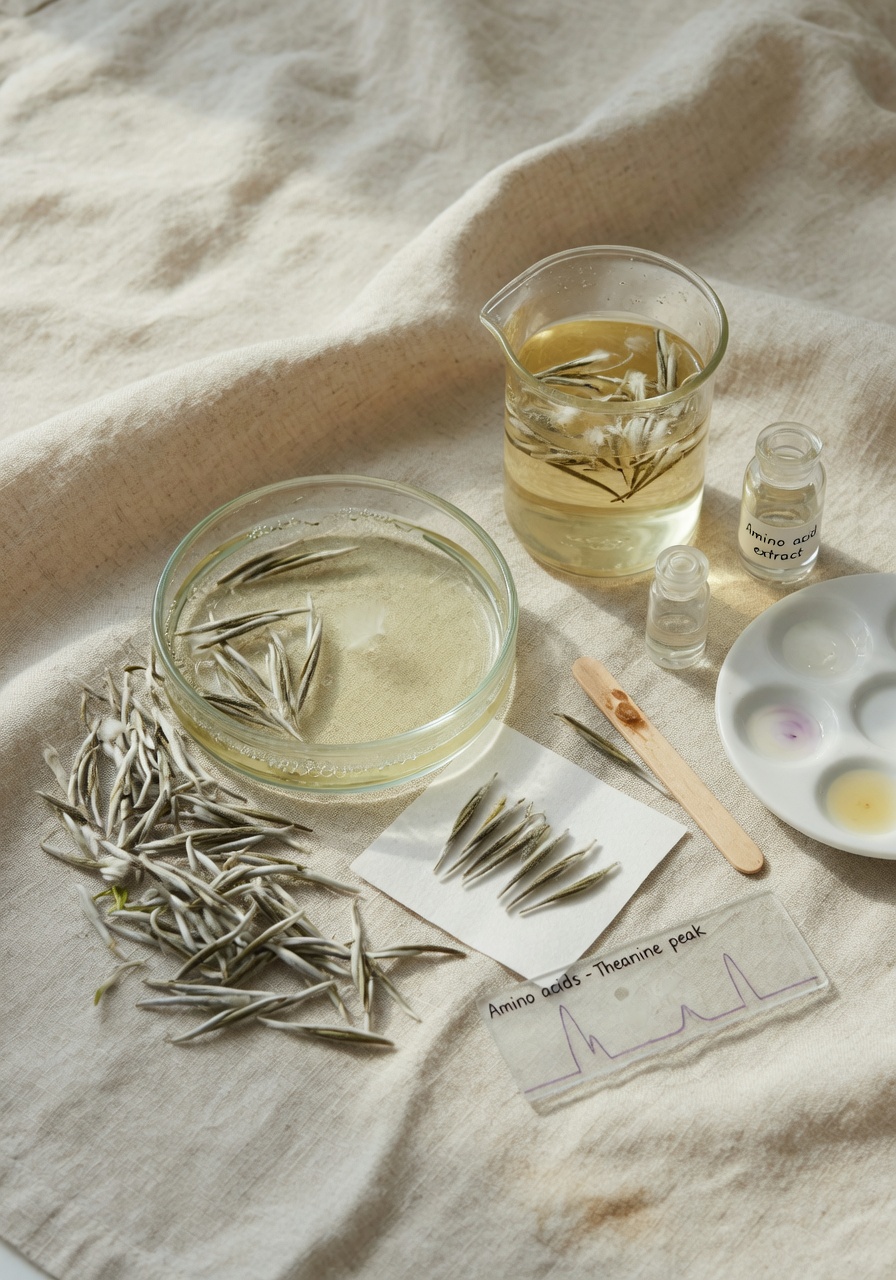
نسبة الثيانين إلى الكافيين — ما قاسته الدراسات
يصل إل-ثيانين إلى الدماغ. الكافيين يوقظه. السؤال المثير للاهتمام ليس ما إذا كان كل منهما يعمل بمفرده، بل ما تفعله النسبة بينهما — وما اختبرته تصاميم التجارب فعليًا.
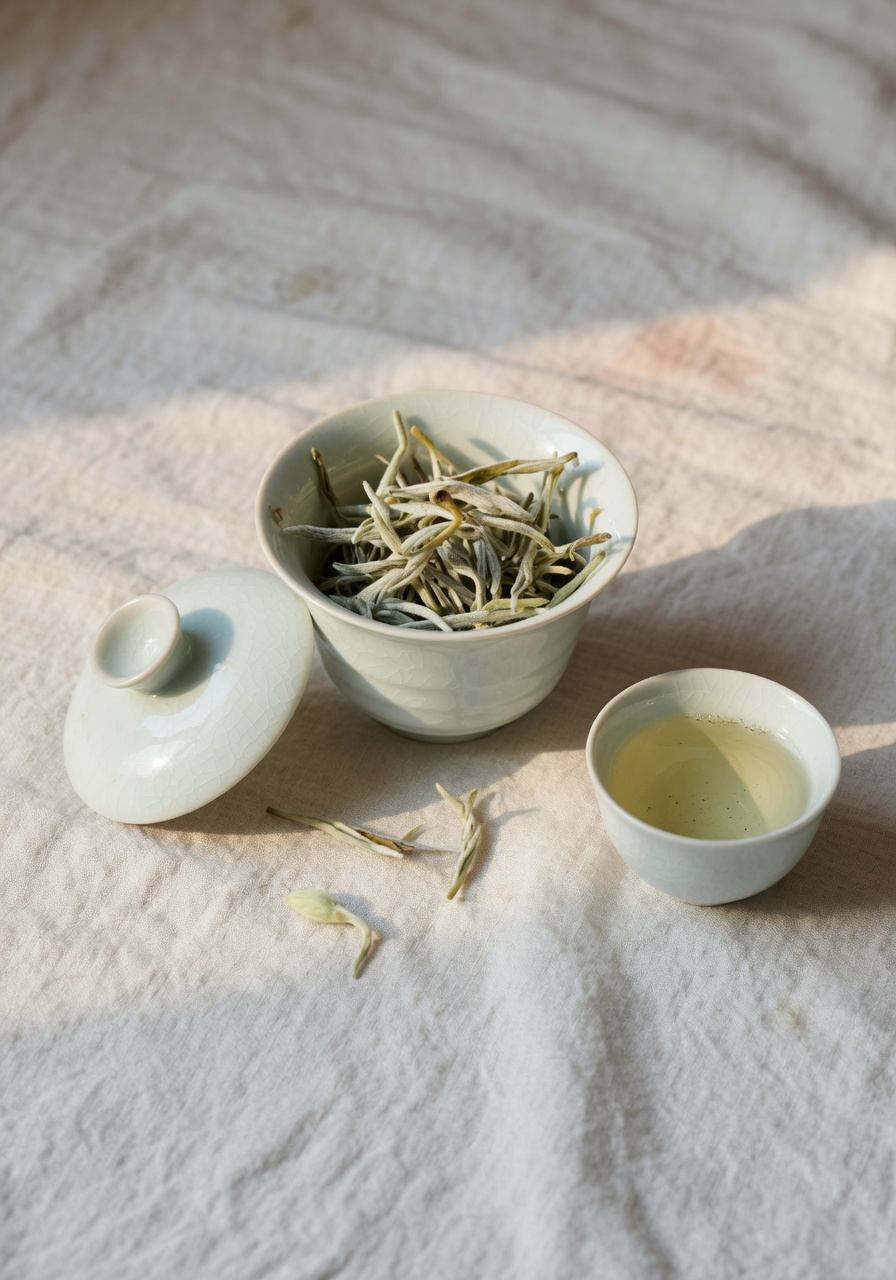
كم كوبًا أكثر مما ينبغي — مسألة سلامة الكلى
نظرة متزنة على الاستهلاك اليومي، وأوكسالات، وحمولة الكافيين، ومتى ينبغي لشاربي الشاي الصيني أن يخففوا السرعة — بدون مسرحيات طبية.
EGCG bioavailability — what's measured in human plasma
What researchers actually find in blood after a cup of green tea — and why 200 mg of EGCG in the cup doesn’t equal 200 mg in plasma.