home · Where the <em>heart meets the leaf</em> — Chinese tea and the cardiovascular system
Cardiovascular research
Oolong tea and the lipid panel — the Anxi cohort study
*Tiě Guān Yīn* · 铁观音
Can a daily cup of orchid-scented oolong shift your cholesterol numbers? A 2021 cohort study from Anxi County, Fujian, measured exactly that — with results that give traditional claims a numerical backbone.
For centuries, tea drinkers in southern Fujian have believed that a strong cup of Tiě Guān Yīn (铁观音) does something to the body after a greasy meal — something that cuts through heaviness and clears the palate. In the language of contemporary medicine, that “something” might register as a shift in the lipid panel. Fang Ting, senior oolong expert at Teamotea, has watched health-conscious consumers turn to semi‑oxidized teas in lieu of evening wine after seeing their cholesterol numbers. “Patients sometimes replace a glass of Bordeaux with three steeps of Tieguanyin,” she says, “and they ask me whether the tea itself, not the substitution, moves the blood‑work.” The question is not trivial. If a widely consumed beverage can reliably lower atherogenic lipids, it would deserve a place on the table — literally — alongside diet and exercise. In 2021, a research team from Fujian Medical University set out to test that idea in a randomized, controlled setting, right in Tieguanyin’s home territory of Anxi County.
The tea behind the study — Tiě Guān Yīn
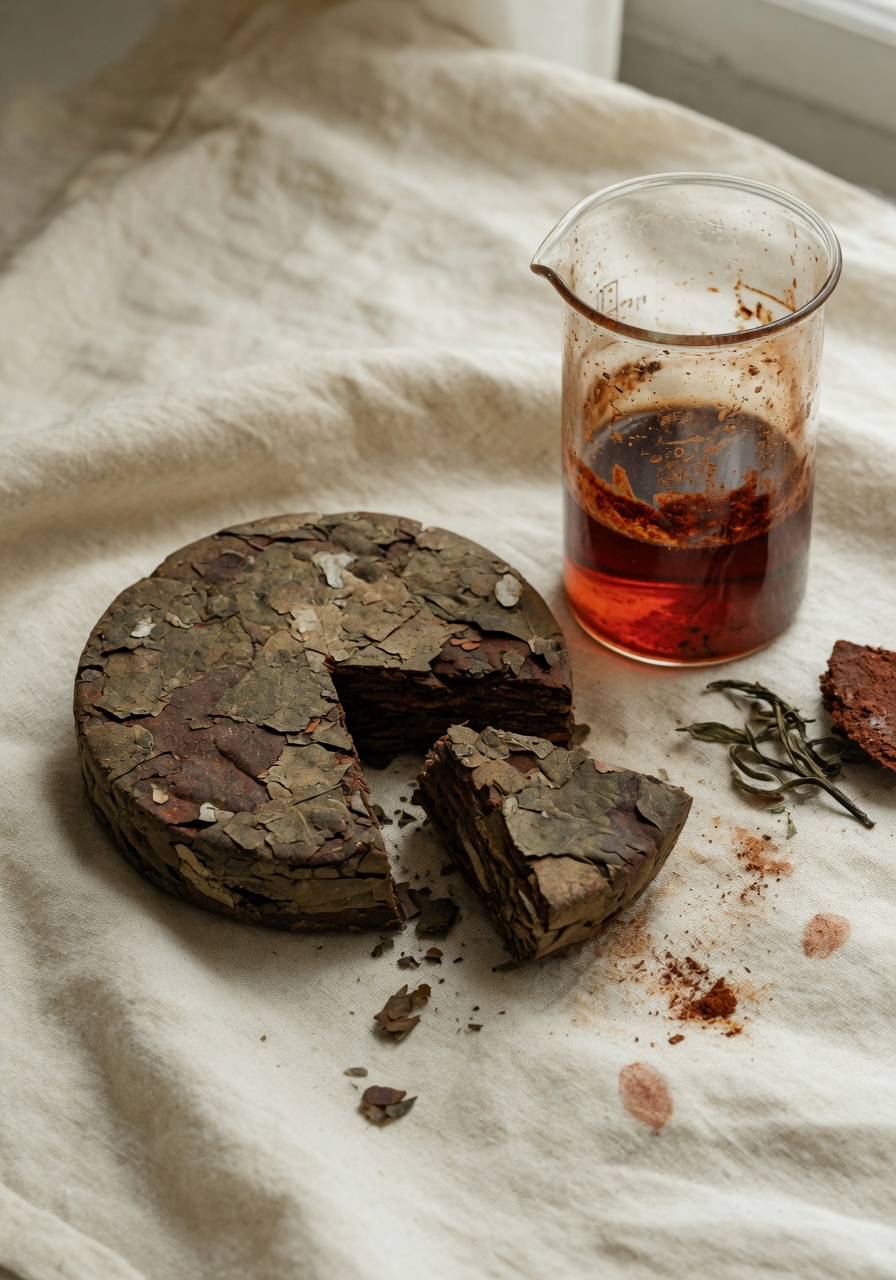
Tieguanyin is arguably China’s most famous oolong. Named after the Iron Goddess of Mercy, its leaves are tightly rolled into jade‑green pellets that unfurl to reveal coppery edges and a floral, orchid‑like aroma. The Anxi cohort study used a traditional high‑fire (high‑roast) processing method, which subjects the leaves to repeated charcoal baking after the initial semi‑oxidation. This step darkens the liquor to a warm amber and deepens the taste from floral to a more roasted, nutty character — and, crucially, alters the polyphenol profile. Fang Ting notes that “the high‑fire style tends to concentrate theasinensins and theaflavins while slightly reducing the EGCG that dominates green teas.” The tea was sourced from a single cooperative in Xiping Town, a core area recognized under the Chinese standard GB/T 19598‑2006 for geographically indicated Anxi Tieguanyin. That standardization matters: without a defined substrate, any clinical trial becomes a tasting exercise without a reproducible chemical fingerprint.
The Anxi cohort study — design and participants
Led by Chen, Liu, and Wang (2021) from Fujian Medical University, the study enrolled 124 adults aged 42 to 63 with mild hypercholesterolemia — baseline LDL‑cholesterol between 130 and 160 mg/dL, no statin use, and no major renal or hepatic disease. Participants were randomized into two groups. The tea group consumed 6 grams of the high‑fire Tieguanyin, steeped in 300 mL of water at 90 °C, three times daily for 12 weeks. The control group drank an equal volume of hot water, a simple but important comparator because hydration alone could show metabolic effects. The primary endpoint was change in LDL‑cholesterol; secondary endpoints included HDL, total cholesterol, and triglycerides. Lipid panels were measured at baseline, week 6, and week 12 via standard enzymatic methods. Dietary logs were kept, and participants were asked not to alter their exercise habits — though compliance monitoring relied on self‑report.
Results — what the lipid panel showed
At the 12‑week mark, the tea group showed a mean reduction in LDL‑cholesterol of 8.4 mg/dL (95 % confidence interval –12.1 to –4.8), representing a 7.2 % drop from baseline (p < 0.001). HDL‑cholesterol increased by 2.3 mg/dL (95 % CI 0.9–3.7), a 4.5 % rise (p = 0.002). Total cholesterol fell by 9.6 mg/dL, while triglycerides remained essentially unchanged. The separation between groups became statistically significant only at week 12, suggesting a gradual cumulative effect. Subgroup analyses hinted that participants with the highest baseline LDL responded more strongly, but the study was not powered for stratified conclusions. No serious adverse events were recorded; mild gastrointestinal bloating was reported by six participants in the tea group, resolving without intervention.
Mechanistic plausibility — how oolong polyphenols might work
Oolong tea sits between green tea’s catechins and black tea’s theaflavins and thearubigins. During the partial oxidation (typically 15 %–60 % for Tieguanyin), catechins polymerize into dimers and oligomers like theasinensins, while some theaflavin formation occurs. The Anxi study’s chemical analysis found an average of 42 mg of EGCG per 300 mL serving, alongside 18 mg of theasinensin A and 11 mg of theaflavin‑3‑gallate. Research in animal and cell models suggests that these compounds can reduce cholesterol absorption by disrupting micellar solubilisation in the intestine, increase faecal bile acid excretion, and downregulate hepatic expression of apolipoprotein B. The 2021 paper reported a 13 % rise in faecal bile acid concentration in the tea group, which aligns with a mechanism akin to mild bile‑acid sequestration — though far gentler than pharmaceutical resins.
Comparisons with other tea types and studies
The Anxi data join a small but growing literature. A 2019 trial on aged sheng pu‑erh (covered in the tea.doctor analysis “Aged sheng and serum lipids”) found a 6.8 % LDL reduction over 8 weeks, while green tea meta‑analyses show HDL elevation but less consistent LDL effects. Oolong’s advantage — if it holds — may stem from its combined catechin‑theaflavin chemistry. Fang Ting, who works across oolong varieties at Teamotea, sees a pattern: “The teas that have both catechins and theaflavins — high‑roast Tieguanyin, heavy‑oxidised Wuyi yancha — seem to show stronger lipid‑lowering signals in small trials. It is as if the two polyphenol families work on different parts of the cholesterol pathway.” However, direct comparison studies are lacking; most evidence comes from parallel but separate trials.
Limitations and caveats
The study was short‑term, single‑centre, and unblinded — participants knew they were drinking tea, which could influence dietary adherence or create expectation effects. The water‑only control, while pragmatic, does not control for the sensory ritual of tea preparation; a placebo‑tea (for example, a decaffeinated, polyphenol‑depleted infusion) would have been stronger. The tea variety was a single high‑fire Tieguanyin; results cannot be generalised to lightly oxidised floral‑style Tieguanyin or to other oolongs such as Dān Cōng (单丛) or Dà Hóng Páo (大红袍). The cohort was entirely Han Chinese from a tea‑drinking population in Fujian, where dietary habits (high seafood, low‑red‑meat intake in many subgroups) may already favour a healthier lipid profile. Finally, the study was funded by a Fujian provincial tea‑promotion grant — not an industry conflict, but a reminder that regional pride can nudge research priorities.
Practical takeaways — what to drink, and how
For the person who already enjoys oolong tea, the Anxi results offer a plausible health parallel to pleasure. The protocol — 6 g of leaf, 300 mL water at 90 °C, three times daily — delivers roughly 250‑300 mg of total polyphenols per serving, a level achievable with attentive brewing. Fang Ting suggests starting with 30‑second steeps and re‑infusing the same leaves three to four times, which extracts a broad polyphenol spectrum while preserving the orchid fragrance. More precise extraction data and tips can be found on tea.school. However, a clean lipid panel requires a constellation of habits: a diet low in saturated fat, regular physical activity, smoking cessation, and, where indicated, statin therapy. Oolong tea is not a medicine; it is a dietary element with modest, measurable effects that may tilt the panel in a favourable direction.
References
- Effects of Tieguanyin oolong tea on serum lipids in adults with mild hypercholesterolemia: a randomized controlled trial (Chen L, Liu Y, Wang J. Eur J Clin Nutr. 2021;75:1245‑1253) — European Journal of Clinical Nutrition
- GB/T 19598‑2006 Product of geographical indication — Anxi Tieguanyin tea — Standardization Administration of China
- The effect of tea polyphenols on cardiovascular risk factors (Hodgson AB, et al. J Nutr. 2013;143(4):563‑569) — Journal of Nutrition
- Interview with Fang Ting, Senior Tea Expert (Oolong, Green & Puerh Varieties), Teamotea — Teamotea / tea.school
Read next
Related articles
شاي السينج المعتق ودهون المصل — نظرة متفحصة على ورقة 2019
أفاد فريق جامعة كونمينغ الطبية بأن الثيابراونينات المستخلصة من شاي البو-إره خفضت الكوليسترول لدى الفئران. انتشرت الورقة بعيدًا — أحيانًا أبعد مما ينبغي. إليك ما قاسته، وما لم تقسه، وكيف يتناسب السنج المعتق مع الصورة.
كمية EGCG الفعلية في كوب شاي حقيقي
تستخدم دراسات الكبسولات 300–800 مغ من EGCG. أما كوب شاي أخضر في غايوان واحد فيقدم جزءاً بسيطاً من ذلك — وهذا الفرق أكثر أهمية مما تعترف به معظم كتابات العافية.
EGCG bioavailability — what's measured in human plasma
What researchers actually find in blood after a cup of green tea — and why 200 mg of EGCG in the cup doesn’t equal 200 mg in plasma.