home · Tea, caffeine, and the journey through <em>pregnancy and breastfeeding</em>
Hydration, caffeine, kidney safety
Tea during pregnancy — what the OB-GYN literature says
Caffeine, polyphenols, folate interactions, and the question of which Chinese teas are gentle enough for a pregnant drinker. A measured look at what obstetric studies actually report.
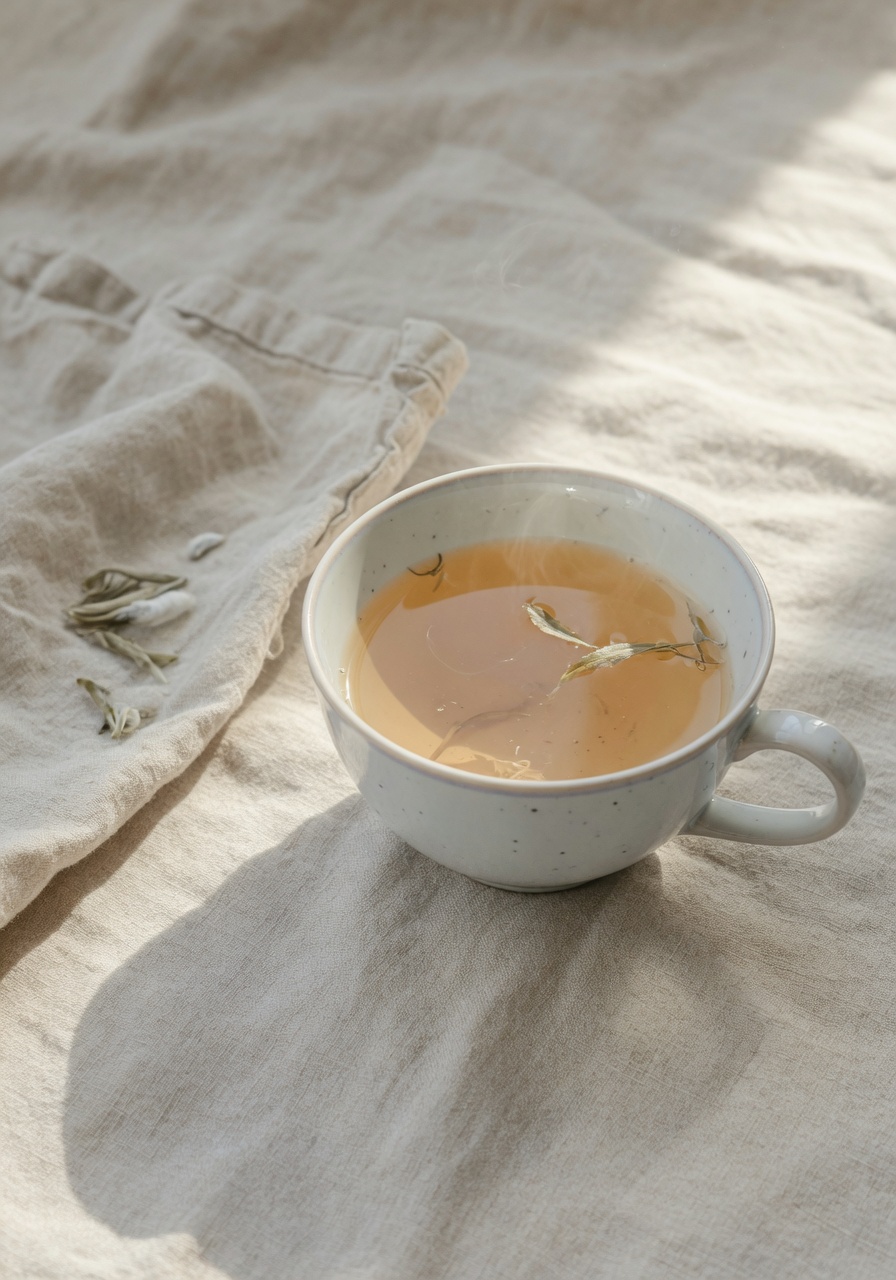
Few questions arrive at the tea counter as often as this one — a woman in her first or second trimester, already cutting coffee, asks whether her habitual pot of Bái Háo Yín Zhēn (白毫银针) is safe to continue. The honest answer is that obstetric literature does not treat tea as a single substance. It treats caffeine as a regulated exposure, folate status as a population-level concern, and tea polyphenols as a small, mostly understudied variable layered on top. This article walks through what the OB-GYN journals actually report, what the WHO and ACOG thresholds are, and how those numbers translate to brewed Chinese tea by leaf weight and steep time. Nothing here is medical advice — any pregnant reader should review intake with her own clinician, and the persistent disclaimer at the foot of every tea.doctor page applies in full. What we can offer is a reading of the evidence and a sense of which Chinese teas, brewed at which strengths, fall comfortably inside the conservative thresholds that obstetric bodies have settled on. The framing matters: a 3 g brew of aged bái mǔ dān in 150 ml of water is a very different exposure from a triple-steeped gōng fū session of young shēng pǔ’ěr, and the literature only begins to make sense once those differences are made explicit. For broader context on daily caffeine and kidney load see our companion piece on how many cups is too many.
What the obstetric consensus actually says about caffeine
The two reference points most clinicians quote are the World Health Organization’s 2016 antenatal care guideline and the American College of Obstetricians and Gynecologists Committee Opinion 462, reaffirmed in 2020. Both converge on a daily ceiling of around 200 mg of caffeine from all sources combined. The WHO frames the recommendation as a precaution against low birth weight in high-caffeine drinkers; ACOG notes that under 200 mg per day appears not to be a major contributor to miscarriage or preterm birth, while acknowledging that the data above that threshold are mixed. A 2020 systematic review by Jack James in BMJ Evidence-Based Medicine argued the threshold should be lower still, but his analysis was widely criticised for treating observational confounding loosely, and neither WHO nor ACOG revised their numbers in response. For a pregnant tea drinker the practical translation is this: the 200 mg ceiling is for everything — espresso, cola, dark chocolate, oolong — not for tea alone. A morning latte of 120 mg already eats most of the budget. A pot of mid-strength Chinese tea on top of that lands a careful drinker in the grey zone the literature debates. The cleaner approach, and the one Chen Hui Yi recommends to clients during consultations in Chaozhou, is to either skip the coffee on tea days or pick teas whose caffeine load is intrinsically lower.
Caffeine by tea category — measured, not assumed
The popular claim that white tea has less caffeine than green tea, which has less than black tea, is roughly half-true and worth unpacking. Caffeine content in dry leaf depends on cultivar, leaf grade, plucking standard, and growing conditions far more than on processing category. Bud-heavy teas — Bái Háo Yín Zhēn, top-grade Jūn Shān Yín Zhēn, fine máo fēng greens — tend to carry the highest caffeine in the dry leaf because caffeine concentrates in the youngest tissue. The Chinese national standard GB/T 8312-2013 sets the analytical method, and published surveys using it report dry-leaf caffeine for Fujian silver-needle whites at roughly 3.5–4.5%, comparable to many Yunnan blacks. What changes the cup is extraction. A 90 °C, 30-second steep of silver-needle releases substantially less caffeine than a 95 °C, three-minute Western brew of broken-leaf black at the same dose. Mei Yang’s notebook from a 2022 dān cōng tasting at Wudong logged a 4 g, 100 ml gōng fū infusion of mì lán xiāng delivering an estimated 45–55 mg of caffeine in the first steep — meaningful, but well within reason for a single cup.
Which Chinese teas tend to be gentlest
Caffeine is not the only variable a pregnant drinker should think about. Tannin density, astringency on an empty stomach, and any traditional herbal additions all matter. Two categories tend to draw the calmest recommendations from clinicians and traditional practitioners alike.
Aged white tea — shòu méi and aged bái mǔ dān
Older, leaf-heavy whites — shòu méi (寿眉) and aged bái mǔ dān (白牡丹) at five to seven years — carry less caffeine per gram than bud-grade silver-needle because the proportion of mature leaf is higher and mature leaf is lower in caffeine. The flavour after aging shifts toward dried apricot, beeswax, and a faint medicinal warmth that many drinkers describe as comforting in early pregnancy when nausea makes brighter teas unpalatable. A standard 4 g brew of seven-year shòu méi in 200 ml, steeped 45 seconds at 95 °C, lands in the 20–35 mg caffeine range — small enough to fit two or three cups inside the 200 mg daily ceiling. Chen Hui Yi notes in her field journal from Fuding (March 2023) that aged whites are the single most common recommendation she makes to pregnant clients who refuse to give up tea entirely.
Lightly oxidised oolongs and roasted Wuyi yán chá
Traditional-roast yán chá (岩茶) and medium-oxidation Anxi tiě guān yīn are often tolerated well, particularly in the second and third trimesters. The roast mellows astringency, and the gōng fū serving size — typically 30–50 ml per cup — keeps total volume modest. Fang Ting cautions, however, that heavily roasted teas can be diuretic in sensitive drinkers, and any tea that increases urinary frequency during late pregnancy should be cut back.
Teas the literature flags for caution
Three categories deserve more thought. The first is young raw shēng pǔ’ěr. Young sheng is high in catechins, often quite caffeinated, and traditionally regarded in Yunnan as a tea that ‘opens the stomach’ — a property pregnant drinkers with reflux frequently do not want. Amgalan Chin, who has logged tasting sessions across Menghai and Yiwu since 2014, observes that young sheng under three years ‘tends to overstimulate, especially on an empty stomach’ and routinely advises pregnant friends to switch to aged sheng or shou. The second category is any tea blended with traditional Chinese herbs marketed as ‘detox’ or ‘slimming’ — these may contain senna, cassia, or other compounds explicitly contraindicated in pregnancy. The third is jasmine-scented green tea that has been heavily scented with synthetic flavouring rather than fresh blossoms; the tea itself is fine, but the scenting process is uneven across producers. For green tea specifically, the question of EGCG exposure deserves its own discussion — and we cover the brewed-cup reality in detail in how much EGCG is actually in a real brew.
The folate question
A point often raised in obstetric forums: does tea interfere with folate absorption? The mechanism cited is that tea polyphenols, particularly EGCG, can bind dihydrofolate reductase in vitro and reduce folate bioavailability. The clinical relevance is smaller than the citations suggest. A 2005 paper by Augustin and colleagues in the Journal of Nutrition examined green-tea-extract supplementation, not brewed tea, and at doses several times higher than a normal cup delivers. Folate supplementation in pregnancy — 400 to 800 µg of folic acid daily as standard prenatal care — is taken specifically because dietary folate is unreliable across many populations. The pragmatic guidance, echoed by clinicians at Peking Union Medical College’s nutrition unit in their 2021 patient handouts, is to take the prenatal vitamin at a different time of day from the main tea drinking — ideally an hour apart — and to not worry beyond that. Iron is the more relevant interaction; tannins do measurably reduce non-heme iron absorption from the same meal, so tea should sit away from iron-rich foods or iron supplements by at least an hour.
Brewing for a smaller exposure
If a pregnant drinker wants to continue with a tea she loves but reduce the dose, three small adjustments make a measurable difference.
Rinse and discard the first short steep
Caffeine is highly water-soluble and extracts quickly. A 10-second rinse at full temperature, discarded, removes a meaningful fraction of caffeine — laboratory work by Hicks and colleagues (1996) put it at roughly 50% for some black teas, though later replications produced lower figures around 25–35%. The point is directional: an initial flash-rinse reduces the dose without sacrificing much flavour, particularly in gōng fū style brewing where the second steep is generally considered the better cup anyway.
Lower water temperature for green and white teas
An 80 °C steep of Tài Píng Hóu Kuí extracts noticeably less caffeine than a 95 °C steep of the same leaf at the same time. The tea also tastes better — less astringent, more umami-forward — so this is a rare case where the gentler choice is also the more skilful one.
Use less leaf
The simplest lever, and the one most often overlooked. Dropping a 5 g brew to 3 g cuts the cup’s caffeine by roughly forty percent. The flavour profile shifts but does not collapse, particularly with aged whites and aged sheng where the leaf is forgiving.
Practical framework, not a prescription
What emerges from the literature is not a clean yes-or-no but a framework. The 200 mg daily caffeine ceiling from WHO and ACOG is the firm number. Chinese tea fits inside that ceiling comfortably if it is the drinker’s main caffeine source, brewed at modest strength, and chosen from categories that lean low — aged whites, well-roasted oolongs, aged sheng or shou pǔ’ěr. It fits poorly if it is layered on top of espresso, brewed heavily, and consists mainly of high-caffeine young material. The herbal question is separate and largely about reading ingredient lists carefully. For tea drinkers planning a pregnancy or already in one, the most useful conversation is the one with a clinician who knows the individual case — gestational age, blood pressure, iron status, sleep, history of miscarriage. This article is background reading for that conversation, not a substitute for it. For deeper study of the chemistry side, the tea.school caffeine module and our research index on tea.doctor both list the primary literature in full.
References
- WHO recommendations on antenatal care for a positive pregnancy experience (2016) — restricting caffeine intake during pregnancy — World Health Organization
- ACOG Committee Opinion 462: Moderate Caffeine Consumption During Pregnancy (reaffirmed 2020) — American College of Obstetricians and Gynecologists
- GB/T 8312-2013 — Tea: Determination of caffeine content — Standardization Administration of China
- James JE. Maternal caffeine consumption and pregnancy outcomes: a narrative review with implications for advice to mothers and mothers-to-be. BMJ Evidence-Based Medicine, 2020. — BMJ Evidence-Based Medicine
- Augustin LSA et al. Tea consumption and folate metabolism. Journal of Nutrition, 2005. — Journal of Nutrition
- Hicks MB, Hsieh YHP, Bell LN. Tea preparation and its influence on methylxanthine concentration. Food Research International, 1996. — Food Research International
Read next
Related articles
كم كوبًا أكثر مما ينبغي — مسألة سلامة الكلى
نظرة متزنة على الاستهلاك اليومي، وأوكسالات، وحمولة الكافيين، ومتى ينبغي لشاربي الشاي الصيني أن يخففوا السرعة — بدون مسرحيات طبية.
كمية EGCG الفعلية في كوب شاي حقيقي
تستخدم دراسات الكبسولات 300–800 مغ من EGCG. أما كوب شاي أخضر في غايوان واحد فيقدم جزءاً بسيطاً من ذلك — وهذا الفرق أكثر أهمية مما تعترف به معظم كتابات العافية.
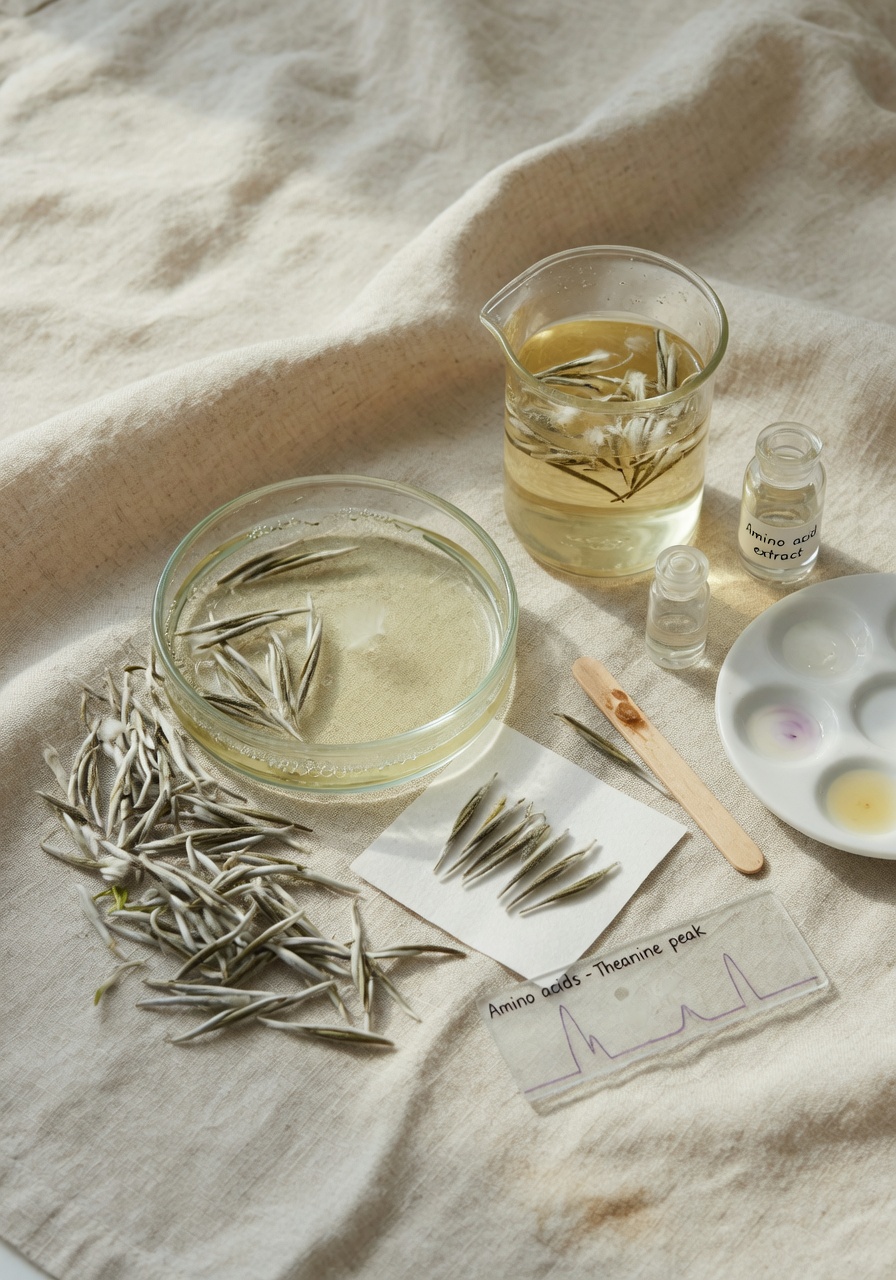
نسبة الثيانين إلى الكافيين — ما قاسته الدراسات
يصل إل-ثيانين إلى الدماغ. الكافيين يوقظه. السؤال المثير للاهتمام ليس ما إذا كان كل منهما يعمل بمفرده، بل ما تفعله النسبة بينهما — وما اختبرته تصاميم التجارب فعليًا.