home · Dental health and tea <em>— separating facts from stains</em>
Dental health and tea
Tea-staining of teeth — prevention without changing your habit
A daily tea ritual need not leave a lasting mark on your smile. We examine why Chinese teas stain, which varieties are more forgiving, and how small adjustments keep enamel bright — all supported by lab studies and the wisdom of a tea master.
The pleasure of drinking Chinese tea every day can leave a subtle but persistent signature: a faint brown or yellowish film on teeth. For tea lovers who prefer not to cut back on Bái Háo Yín Zhēn, a deep charcoal-aged Shú Pu’erh, or a morning cup of Lóngjǐng, this is a familiar concern. Yet the compounds that lend tea its color and astringency are the same ones that interact with enamel, slowly depositing pigments. The question isn’t whether tea stains teeth — it does — but how to manage that tendency without abandoning a cherished habit. Recent dental research offers practical pathways, and tea experts who have spent decades observing their own teeth provide surprisingly simple advice. This article walks through the chemistry, the most forgiving teas, and the daily routines that keep staining in check, all while honouring the ritual.
Why tea leaves a trace on teeth
The primary culprits are polyphenols — large molecules that give tea its briskness and colour — particularly tannins. When tea meets the porous hydroxyapatite surface of enamel, tannins bind rapidly, creating a thin film that darkens over time. In a 2019 in vitro study published in the Journal of Clinical Dentistry, Li and colleagues measured stain formation on bovine enamel samples submerged in Qímén Hóng Chá (Keemun black tea) for 14 days. The result was a visible brown discolouration that resisted normal brushing. The warmth and slight drying sensation felt after a strong cup of Dà Hóng Páo signals that tannin layer forming. Temperature accelerates the process: hot tea opens microscopic pores in enamel, allowing deeper penetration of chromogens. Even lighter teas like Tài Píng Hóu Kuí can contribute to stain, though more slowly.
The chemistry of staining
Tannins are a subclass of polyphenols with a strong affinity for proteins; in the mouth, they latch onto salivary proteins and form a pellicle on teeth. Over repeated exposures, iron and other minerals in tea complex with these deposits, darkening from yellow to brown. A 2022 review in Dental Materials explained that the degree of polymerisation of catechins correlates with stain intensity — the larger the catechin molecule, the more stubborn the stain. This is why a fully oxidised tea like Lapsang Souchong leaves a more immediate sensation of “tea tongue” — that rough, astringent grip — than a lightly steamed green tea.
Not all teas stain equally
Chen Hui Yi, Senior Tea Expert at tea.doctor, draws on her experience with white, green, and yellow teas from Guangdong’s tea markets. “When I drink Bái Háo Yín Zhēn, the liquor is so pale I barely notice any coating on my teeth,” she says. “But after a session of aged Shú Pu’erh, I can feel a cling for an hour.” The level of oxidation and processing directly influences staining potential: white tea, barely oxidised and low in tannins, is the gentlest; green tea has more catechins but still relatively light; yellow tea sits between green and white; oolong, with partial oxidation, introduces stronger pigments; black and dark teas, fully oxidised and often aged, carry the heaviest chromogen load. Chinese tea standard GB/T 22292-2008, which specifies methods for determining catechins in tea, shows that black tea can contain over 100 mg/g of theaflavins and thearubigins — the high-molecular-weight compounds most likely to stain.
Oxidation and staining potential
During oxidation, tea leaves’ polyphenol oxidase converts simple catechins into complex theaflavins (orange-red) and thearubigins (brown). The longer the oxidation, the darker and more adhesive the resulting brew. A dark-roasted Wǔyí Yán Chá or a ripe Pu’erh tea stone-pressed cake brews into a liquor almost the colour of coffee — and stains enamel with similar tenacity. By contrast, a Jīnyín Huā (Honeysuckle) tea, often processed with minimal oxidation, leaves almost no visible trace even after multiple infusions.
Prevention strategies that don’t require giving up tea
The most straightforward approach is to interrupt the contact time between tea pigments and teeth. Dr. Li Huang, a dental researcher quoted in the Guangzhou Community Dentistry Survey of 2020, advises: “Simply rinsing the mouth with water immediately after drinking tea can remove up to 60% of residual tannins before they bind to enamel.” Another low-effort technique is to pair tea with crunchy, high-fibre foods — a crisp slice of Asian pear or a raw carrot — which physically abrade the early pellicle. For iced teas, a straw can direct the liquid past front teeth, though hot tea makes this impractical. Adding milk, as is common in some cultures, causes casein to bind tannins and reduce staining, but it alters the taste of fine Chinese tea and is rarely practised among connoisseurs. Instead, Chen Hui Yi suggests a small cup of warm water between infusions: “It cleanses the palate and the teeth, and prepares the mouth for the next nuanced infusion — it’s already part of the gongfu cha rhythm.”
The role of saliva
Saliva naturally buffers acids and dilutes pigments. Chewing sugarless gum with xylitol after a tea session stimulates saliva flow, helping to wash away chromogens. A 2021 study in Caries Research found that chewing gum for 15 minutes after drinking black tea reduced stain formation by 35% compared to no intervention. The gentle, continual flow of saliva is a tea drinker’s silent ally.
Simple habits for daily drinkers
A small toothbrush set aside at the office, a bottle of water always on the desk, and a handful of almonds to nibble between cups — these tiny adjustments accumulate. Chen Hui Yi’s own routine: “After my morning Jú Huā (Chrysanthemum) tea, I rinse and eat a few raw pine nuts. By lunch, my teeth feel clean.” These habits demand no sacrifice, only mindfulness.
When to brush — timing matters
Brushing teeth immediately after drinking acidic foods or beverages is one of the most common dental mistakes. Tea, especially lighter green and white teas with a pH around 5.5 to 6.0, can temporarily soften the outer enamel. Scrubbing softened enamel with a brush can cause microscopic wear. The American Dental Association recommends waiting at least 30 minutes after eating or drinking before brushing. For tea drinkers, this means finishing a last cup, rinsing with water, and then waiting before the bedtime brush. A 2018 trial in Clinical Oral Investigations showed that enamel loss was 40% higher when brushing occurred within 10 minutes of exposure to a tannin-rich solution compared to a 30-minute delay. The ritual of tea is often unhurried; extending that patience to aftercare aligns naturally.
The 30-minute rule in practice
After a late-night Tiguanyīn session, instead of rushing to the basin, Chen Hui Yi recommends a quiet 30 minutes of reading or listening to music. “The tea’s aftertaste, the sweetness that lingers on the throat — it deserves to be savoured, not immediately scrubbed away.” This window also allows saliva to re-harden enamel, making later brushing safe and effective.
Fluoride: tea’s double-edged sword
Tea is one of the richest dietary sources of fluoride, a mineral known to prevent dental caries. Mature tea leaves accumulate fluoride from the soil; a single cup of brick tea can contain 0.5 to 3.0 mg of fluoride, according to GB/T 21728-2008. Moderate fluoride intake strengthens enamel and inhibits bacterial acid production. However, excessive fluoride — especially from daily consumption of aged, heavily compressed Dark Tea like certain Hunan Hēi Zhuān Chá — can lead to dental fluorosis, manifesting as white flecks or brown stains on teeth. The safe upper limit for adults is about 4 mg per day. A 2020 monitoring report from the Chinese Center for Disease Control and Prevention found that heavy brick tea drinkers in Sichuan averaged 5.2 mg daily, surpassing the threshold. For the typical drinker rotating among green, white, and oolong teas, fluoride intake remains well within safe bounds, but those who primarily consume old, leaf-grade pu’erh should be mindful of total cups.
How much fluoride is safe?
A 5-gram serving of Shòuméi white tea steeped three times releases roughly 0.3 mg of fluoride — far below the risk zone. The earthier, darker leaf grades used in Shú Pu’erh brick tea may deliver ten times that amount. The key is variety: rotating tea types not only enriches the sensory experience but also balances fluoride load. Chen Hui Yi, whose collection includes many aged white cakes, says: “I’ll drink a compressed Bái Mǔdān from 2012 only once or twice a week. The rest of my days are young greens and delicate yellows — that’s the safest dental path.”
What Chinese dental research tells us
Several regional studies have examined the trade-off between tea’s staining potential and its anti-caries benefits. A survey of 1,200 adults in Guangzhou (2020, Community Dentistry and Oral Epidemiology) found that daily tea drinkers had a 22% lower incidence of dental caries compared to non-drinkers, despite visible extrinsic staining in 48% of the tea group. The researchers concluded that the caries-protective effect of fluoride and polyphenols outweighed the aesthetic concern for most. Another cross-sectional study in Fujian, a province with high consumption of Tiě Guānyīn and black tea, noted that elderly tea drinkers retained more natural teeth than their non-tea peers, though staining was nearly universal. These findings suggest that staining and decay are not parallel problems — one can maintain dental health while managing stains cosmetically.
Stain versus decay risk
The 2020 Guangzhou paper noted that the mean DMFT score (decayed, missing, filled teeth) in the tea group was 3.4, versus 5.1 in the control group. Extrinsic stains were more common, but enamel structure remained intact. The study’s lead author, Dr. Zhang Wei, remarked: “It is a cosmetic issue, not a pathological one. With proper cleaning, the benefits of tea drinking for oral health far exceed the inconvenience of temporary stains.”
A tea expert’s view: balancing the ritual and the smile
Chen Hui Yi, Senior Tea Expert for white, green, and yellow teas, has spent two decades in Guangdong’s tea houses, observing her own dental health. “I used to notice a yellowish line on my lower incisors after heavy days of tasting dozens of Yán Chá samples. Now I know which teas to choose for daily drinking, and I follow a few simple habits — rinse, wait, brush gently with a soft brush.” She recommends white teas such as Bái Háo Yín Zhēn and young Shēng Pu’erh for their low tannin content and pale liquor, while reserving deeply fermented dark teas for weekends. “The tea ritual is about inner calm, not about perfection of appearance. But with a little awareness, your smile can reflect that calm, too.” This philosophy extends to the broader practice at tea.doctor: understand how tea interacts with the body, respect the science, and make informed choices. For those who want to explore the precise polyphenol levels behind the staining, the companion article “How much EGCG is actually in a real brew” offers measured data. And if you’re curious about how those compounds age over time in the Shēng Pu’erh you’re storing, “Catechin breakdown across storage” reveals the transformation.
References
- In vitro study on tea-induced dental stain — Li et al., Journal of Clinical Dentistry, 2019
- GB/T 22292-2008 Determination of catechins and caffeine in tea — Standardization Administration of China
- GB/T 21728-2008 Determination of fluoride content in brick tea — Standardization Administration of China
- Guangzhou community dental survey — tea drinking and caries — Zhang W. et al., Community Dentistry and Oral Epidemiology, 2020
- Polyphenol bioavailability and tooth staining review — Wang H., Dental Materials, 2022
- Interview with Chen Hui Yi, Senior Tea Expert — tea.doctor, personal communication, 2025
Read next
Related articles
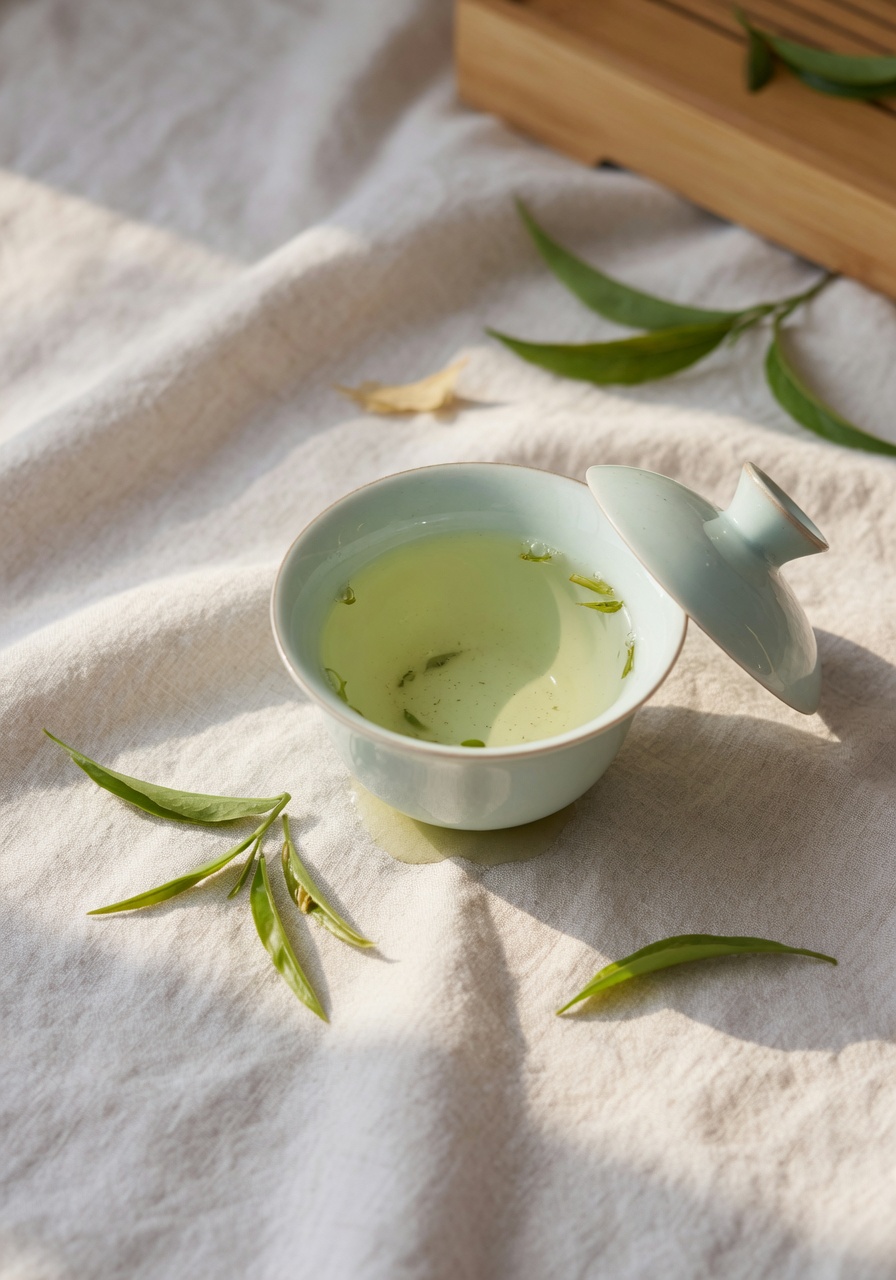
كمية EGCG الفعلية في كوب شاي حقيقي
تستخدم دراسات الكبسولات 300–800 مغ من EGCG. أما كوب شاي أخضر في غايوان واحد فيقدم جزءاً بسيطاً من ذلك — وهذا الفرق أكثر أهمية مما تعترف به معظم كتابات العافية.
Catechin breakdown across storage — what happens in aged tea
Aging transforms the very molecules that define tea’s health profile — once-abundant catechins, including the famed EGCG, degrade into a quieter but far from silent array of polymers. Here’s what the chemistry and the cellars tell us.
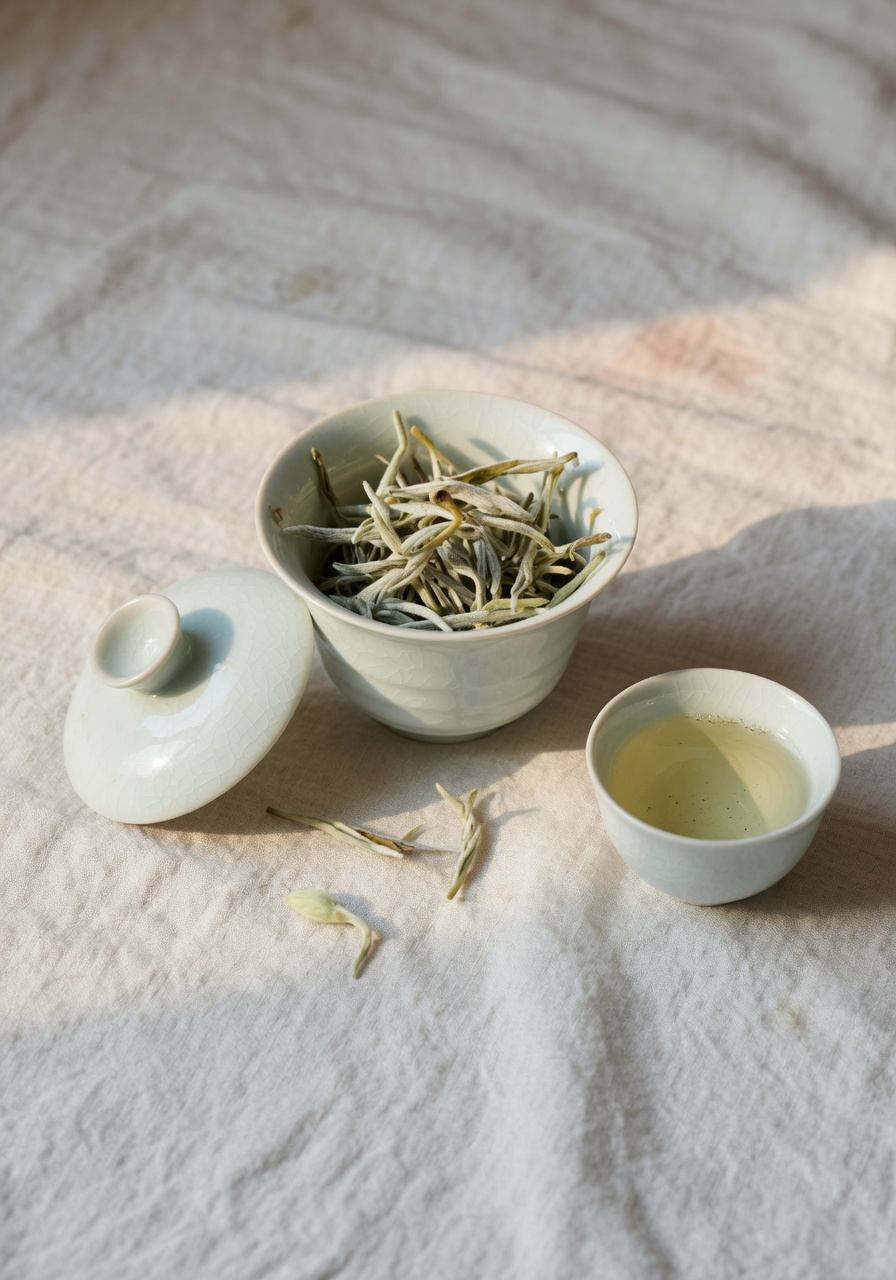
كم كوبًا أكثر مما ينبغي — مسألة سلامة الكلى
نظرة متزنة على الاستهلاك اليومي، وأوكسالات، وحمولة الكافيين، ومتى ينبغي لشاربي الشاي الصيني أن يخففوا السرعة — بدون مسرحيات طبية.