home · الحمض الأميني الهادئ الذي <em>يعبر إلى الدماغ</em>
Cognitive Science & Exam Preparation
Theanine during exam preparation — the cognitive literature
*Bái Háo Yín Zhēn* · 白毫银针
L-theanine, the amino acid that makes tea calming, has caught the attention of students worldwide. We comb the literature to see what’s really measured — and what’s still guesswork.
Every May, libraries fill with students clutching thermoses of tea. They aren’t just after caffeine — the quiet companion is L-theanine, a non-protein amino acid that crosses the blood–brain barrier and has been linked to relaxed alertness and sharper attention. The claim is appealing: a natural compound that helps you stay focused without jitters, calms pre-exam nerves without sedation, and partners with caffeine to produce a clean, sustained cognitive edge. But how much of this is supported by peer-reviewed data, and how much is inherited wishful thinking? As Senior Tea Expert Chen Hui Yi from Guangdong points out, “When I infuse high-grade Bái Háo Yín Zhēn (白毫银针) at 80 °C, the first sip carries a calm, savory sweetness that seems to quiet mental chatter — a quality I link directly to its elevated theanine content.” That sensory intuition has a growing body of research behind it. This article walks through the strongest studies on theanine and cognition, places them in the context of real tea-drinking, and highlights where the evidence is still thin.
What L-theanine is and why it matters for exam season
L-theanine (γ-glutamylethylamide) is unique to the tea plant Camellia sinensis and a handful of mushrooms. In tea, it is synthesised in the roots and concentrated in new shoots and buds — exactly the parts that go into high-grade white and green teas. The silver-furred buds of Bái Háo Yín Zhēn, plucked in early spring in Fuding and Zhenghe, can contain over 3% theanine by dry weight, more than most other teas. The molecule is structurally similar to the neurotransmitter glutamate, and it binds to the same receptors, but instead of firing neurons it exerts a modulatory, calming influence. During exam season, when deep reading and sustained attention are needed, the traditional instinct to reach for a delicate white tea or a gently steamed green makes biochemical sense. Chen Hui Yi recalls that many students who visit her tea tastings report “a kind of mental stillness” after a properly brewed Bái Háo Yín Zhēn — something they describe as distinct from a caffeine buzz. The task of the research literature has been to turn such anecdotes into measurable effects.
How theanine works in the brain
To affect cognition, theanine must first cross the blood–brain barrier. It does so rapidly — within 30 minutes — by hitching a ride on the large neutral amino acid transporter, the same system that carries leucine and phenylalanine. Once inside, theanine increases levels of the inhibitory neurotransmitter GABA, and modestly raises serotonin and dopamine in the striatum, hippocampus, and prefrontal cortex. The net effect, confirmed by electroencephalography (EEG), is an increase in alpha-band activity (8–13 Hz). Alpha waves are classically associated with a state of wakeful relaxation and closed-eye calm, but they also facilitate selective attention: the brain suppresses irrelevant sensory input while staying receptive to task-relevant signals. In a landmark 1999 paper, Juneja and colleagues showed that 200 mg of theanine (roughly equivalent to 3–4 cups of high-quality white tea) produced a significant rise in occipital alpha power within 40 minutes, without inducing drowsiness. Later studies replicated this effect and linked it to improved performance on attention-demanding tasks — exactly the kind of mental work required during exams.
Attention, reaction time, and stress — the measured outcomes
The cognitive literature splits theanine’s exam-relevant effects into two streams: attention enhancement and stress reduction. Often, the two are studied together, because a calmer brain can sustain focus longer.
Measured attention gains
A 2008 study by Haskell and colleagues gave healthy volunteers 150 mg theanine, 50 mg caffeine, or a combination, then measured performance on rapid visual information processing, digit vigilance, and sentence verification. The combination improved accuracy on the attention task by roughly 3% compared to placebo, and participants reported feeling more alert but less tense. The effect was greater than either compound alone. A later systematic review (Camfield et al., 2014) pooled data from 11 trials and concluded that theanine plus caffeine reliably improved alertness and accuracy on demanding cognitive tasks within 90 minutes, whereas theanine alone primarily reduced self-reported anxiety. For a student sitting a three-hour paper, a cup of theanine-rich tea sipped during breaks could offer a measurable edge — not by making you smarter, but by maintaining your ability to screen out distraction.
The anti-stress effect in real-life settings
Stress impairs retrieval of studied material, so anything that blunts an exaggerated stress response without sedation is valuable. Kimura and colleagues (2007) took 12 fourth-year university students about to undergo a stressful pharmacy practice exam and gave them 200 mg theanine or placebo one hour beforehand. The theanine group showed a smaller rise in heart rate — about 5 bpm lower — and lower salivary immunoglobulin A responses, a marker of psychological stress. Subjective anxiety was reduced, but performance on a mental arithmetic task was not compromised. In other words, theanine softened the physiological edge of stress while leaving cognitive capacity intact. Tea drinkers recognise this profile: the quiet, focused feeling after a bowl of Lóng Jǐng or a pot of Bái Háo Yín Zhēn, where the mind is alert but not racing.
The caffeine–theanine balance in your cup
No article on exam-time theanine can ignore its partner, caffeine. The tea plant packages them together, and the research suggests they work best in tandem. A cup of Bái Háo Yín Zhēn brewed with 3 g of leaf and 80 °C water for 3 minutes delivers roughly 20–30 mg caffeine and 40–50 mg theanine — a roughly 1:2 ratio that matches the doses used in many cognition studies. Too much caffeine, and the anxiolytic benefit of theanine can be overwhelmed; too little, and the alerting boost fades. Our companion article “The theanine-to-caffeine ratio — what the studies measured” (on tea.doctor) dives into the dose–response curves. For the student, the practical takeaway is to choose intact leaf teas with known high theanine levels — white tea buds, shade-grown gyokuro (
Smart use and safety during study marathons
Theanine has an excellent safety profile: the FDA lists it as GRAS (generally recognised as safe), and Japanese authorities have permitted its use in foods since 1964. However, studies almost never exceed single doses of 400 mg or daily intake above 1,200 mg — the equivalent of about 20 cups of strong white tea. Drinking that much tea introduces a risk of excessive caffeine and oxalate load, as discussed in our article “How many cups is too many — the kidney-safety question.” For a typical student, 3–5 cups spread across a study day provide a sensible theanine dose while keeping caffeine around 150–200 mg. Pregnant students, or those taking medication for anxiety or hypertension, should consult a physician. Lastly, theanine cannot replace sleep — the best cognitive enhancer remains a full night of rest before the exam. That said, a measured tea habit during revision is one of the gentlest, most research-supported rituals a student can adopt. For those curious to explore high-theanine Chinese whites and greens, thetea.app lists teas graded by amino-acid content, and tea.school offers brewing workshops that teach how to extract the most theanine from every leaf.
References
- Juneja, L. R., et al. (1999). L-theanine — a unique amino acid of green tea and its relaxation effect in humans. Trends in Food Science & Technology, 10(6-7), 199-204. — Juneja et al. (Trends in Food Sci & Tech)
- Haskell, C. F., Kennedy, D. O., Milne, A. L., Wesnes, K. A., & Scholey, A. B. (2008). The effects of L-theanine, caffeine and their combination on cognition and mood. Biological Psychology, 77(2), 113-122. — Haskell et al. (Biological Psychology)
- Kimura, K., Ozeki, M., Juneja, L. R., & Ohira, H. (2007). L-Theanine reduces psychological and physiological stress responses. Biological Psychology, 74(1), 39-45. — Kimura et al. (Biological Psychology)
- Camfield, D. A., Silber, B. Y., Scholey, A. B., et al. (2014). L-Theanine, caffeine, and their combination improve cognitive function and mood: a systematic review. Nutrition Reviews, 72(5), 287-303. — Camfield et al. (Nutrition Reviews)
- GB/T 22291-2017, White tea. National Standard of the People’s Republic of China. — Standardization Administration of China
Read next
Related articles
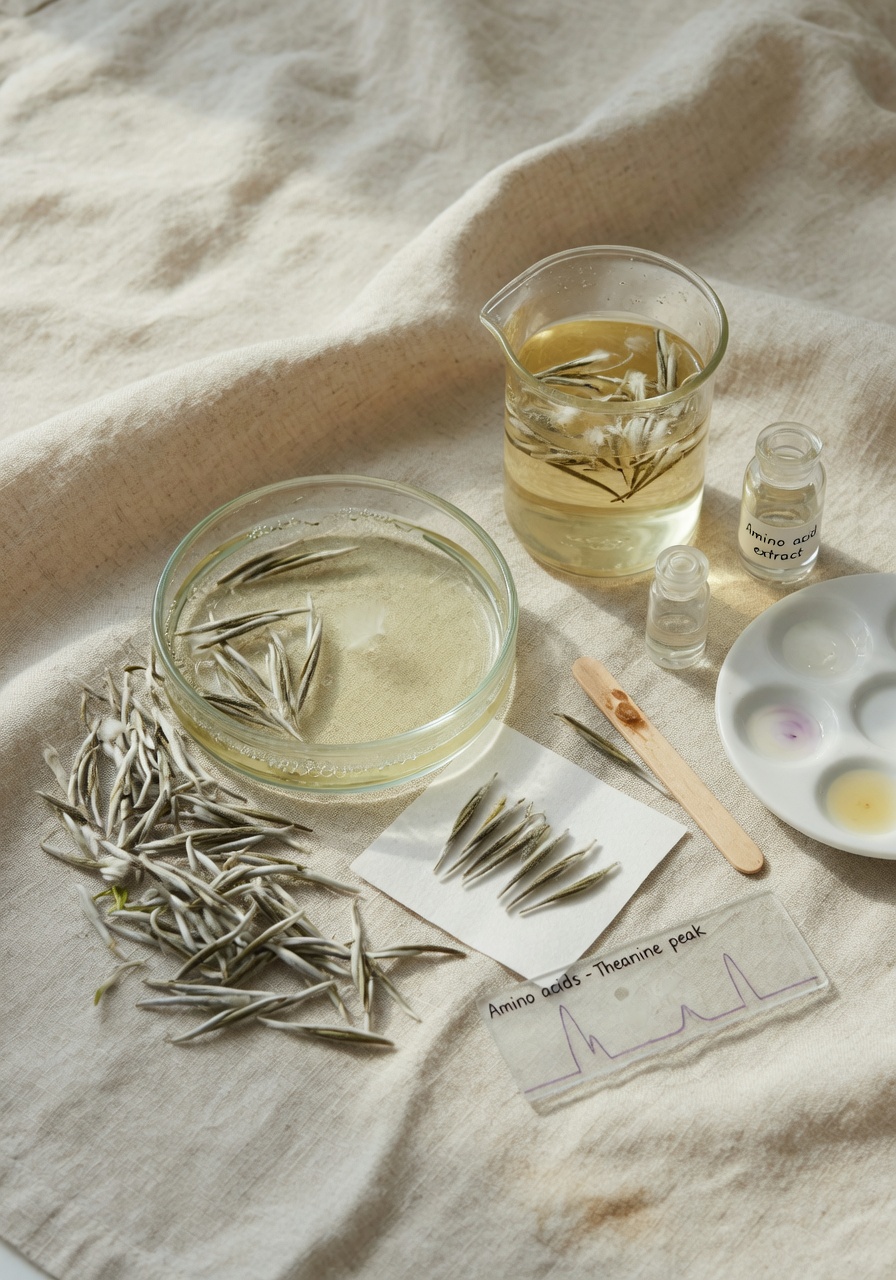
نسبة الثيانين إلى الكافيين — ما قاسته الدراسات
يصل إل-ثيانين إلى الدماغ. الكافيين يوقظه. السؤال المثير للاهتمام ليس ما إذا كان كل منهما يعمل بمفرده، بل ما تفعله النسبة بينهما — وما اختبرته تصاميم التجارب فعليًا.
Theanine and acute stress reactivity — the small studies
What happens when a person drinks a cup of tea before a stressful task? While anecdotes describe a calm focus, the scientific literature is full of small, controlled experiments that try to measure theanine’s effect on heart rate, blood pressure, and even salivary markers of stress. Here’s what they found, and what remains uncertain.
Tea late at night — what it does to sleep architecture
Does a late-night pot of tea guarantee a restless night? Research on caffeine's half-life and theanine's calming influence suggests the answer depends on the leaf — aged whites and fermented pu'er may shift the balance in unexpected ways.
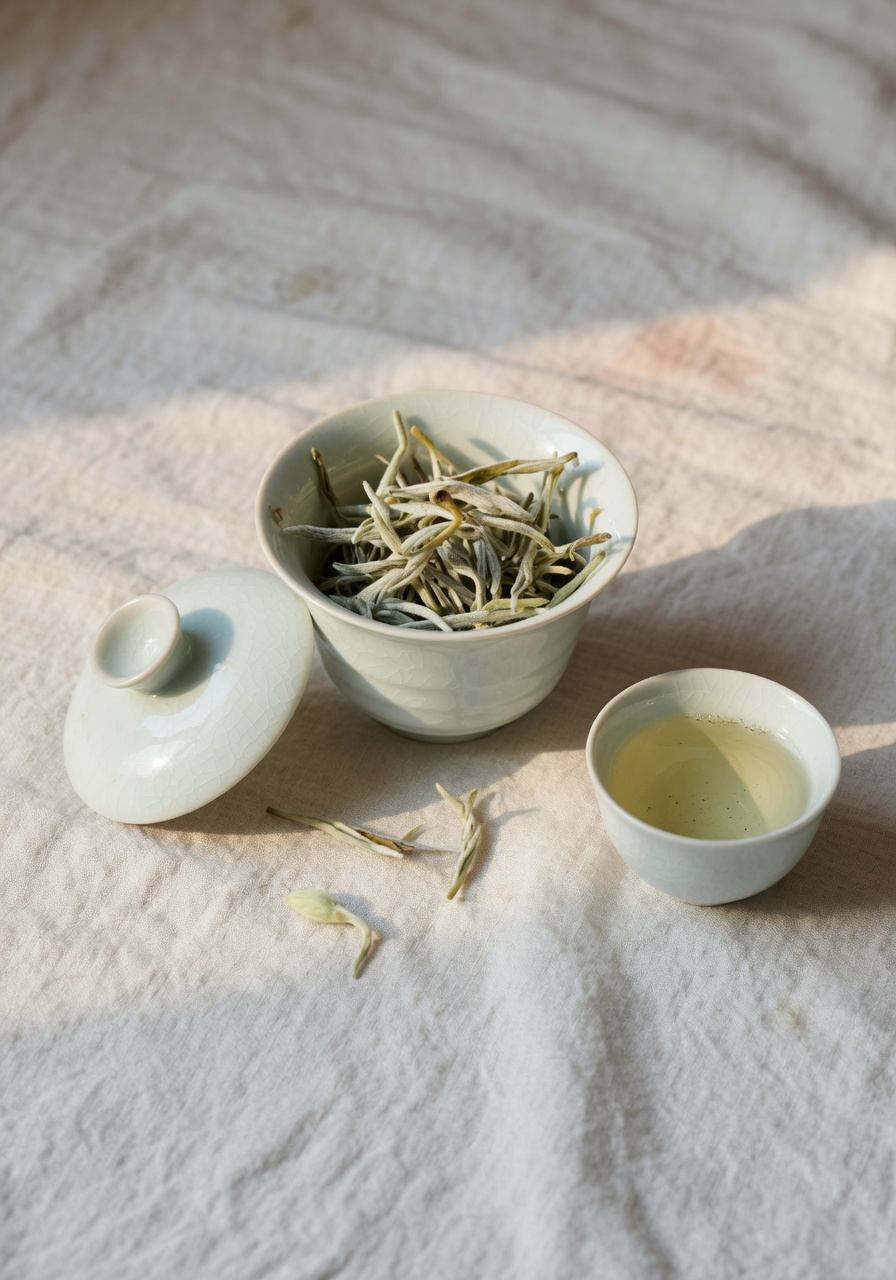
كم كوبًا أكثر مما ينبغي — مسألة سلامة الكلى
نظرة متزنة على الاستهلاك اليومي، وأوكسالات، وحمولة الكافيين، ومتى ينبغي لشاربي الشاي الصيني أن يخففوا السرعة — بدون مسرحيات طبية.